
Kiyiz uy (yurt)
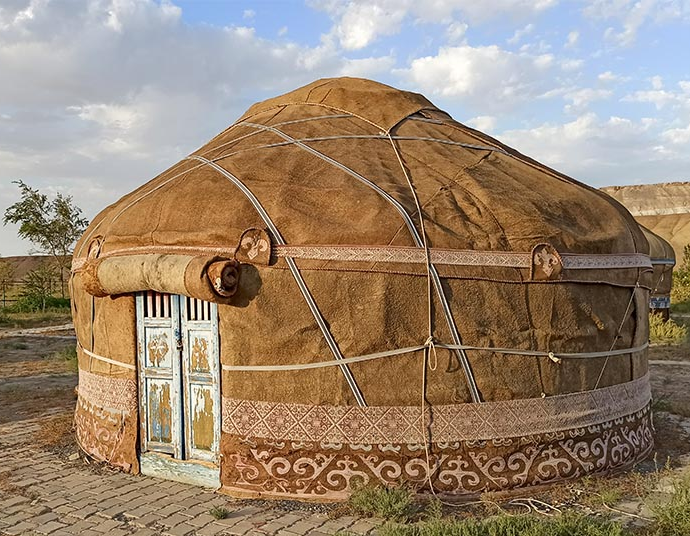
The Kazakh name for the yurt, ‘kiiz ui’ – ‘felt house’ – is derived from ancient fundamental symbolic elements of the culture: felt, which traces back to the symbol of a sacred animal, and the concept of ‘home’ as the macro- and microcosm of human existence. The profound semiotic nature of the Kazakh yurt is rooted in the universal principles of dwelling construction, dating back to time immemorial, centred around a symbolic axis of the world that connects the celestial, terrestrial and subterranean symbolic realms. The yurt embodies the harmony between the universe and humankind, captured in the aesthetic contemplation of the nomad, who philosophically imbues the world with spirit, preserving its sacredness in harmony with the everyday. ‘He, who is unaware of the transcendent world cannot accept the wholeness of the universe’ (M. Auezov).In Kazakh culture, and more broadly in Turkic culture, the yurt serves as the focal point of virtually the entire wealth of cultural heritage, folk art, and all the main types of traditional crafts. The yurt’s structure and its entire contents embody the universe of nomadic culture, the nomads’ worldview, which still holds many unsolved mysteries.