
Tuskiz, 20th c. K. Mamanova
Collection of the State Museum of the Republic of Kazakhstan. 8-vol. • Semipalatinsk Region. • Folk artist Mamanova Kulzia • Velvet, felt, cotton, coloured threads, tambour stitch
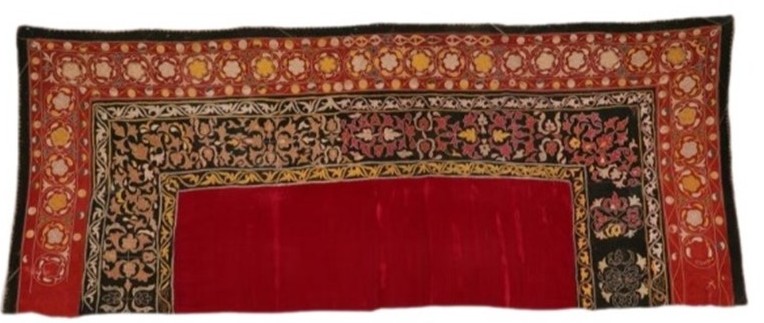
The composition of the item is based on a U-shaped design. The central section is made of smooth red velvet and left unadorned, creating a striking colour field and enhancing the decorative effect of the surrounding ornamental bands. Several ornamental borders are arranged around the perimeter, gradually narrowing towards the centre. This compositional structure is characteristic of Kazakh tuskiiz and creates a sense of depth and solemnity.The ornamental scheme consists of plant and stylised floral motifs forming a continuous rhythmic pattern. The ornamental elements are repeated symmetrically, forming a decorative band. The use of small, repeating motifs creates a dynamic rhythm and enhances the decorative richness of the piece.The colour scheme is based on the contrast between a rich red background and dark ornamental bands (black and dark brown), complemented by golden, yellow, pink and white shades. The colour red traditionally symbolises vitality, prosperity and festivity, which is why it was frequently used in home decoration.