Traditional and contemporary art of Kazakhstan

A Virtual Journey into the World of Kazakhstan’s Artistic Heritage

This Web Gallery presents the diversity of artistic practices in Kazakhstan, reflecting the continuity of cultural traditions and the dynamic development of contemporary creative processes. The virtual exhibition features works based on national images, symbols, and themes, as well as artworks by contemporary artists who reinterpret the country’s cultural heritage through contemporary artistic forms, expressive means, and modern technologies.

The selected works demonstrate the relationship between traditional and contemporary art, revealing the distinctive features of the national worldview, cultural identity, and cultural meanings. The presented materials allow viewers to trace how elements of historical and cultural heritage are reflected in contemporary artistic practice, while maintaining their significance and relevance in an increasingly globalized world.

The Web Gallery is aimed at promoting Kazakhstan’s artistic heritage, expanding public access to works of art, and fostering a lasting interest in national culture and art among a wide audience.

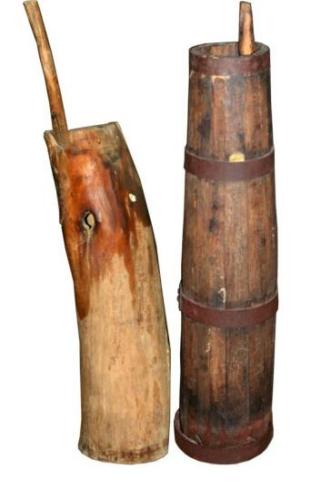
Kübi

A kubi is a large wooden vessel used for churning kymyz, ayran, and shubat. Milk prepared for making kumis was poured into a kubi, which was shaped like a truncated cone or cylinder, and covered with a lid with a hole for the long handle of a wooden churn called a pispek. Using the whisk, often decorated with silver inlays at the top and a flat bottom corresponding to the size of the kubi, the milk was whipped to produce a healthy drink. With a height of 80 cm, the kubi had a capacity of 20-30 litres of kymyz. Sometimes the kubi was made of slats and a solid bottom, with the vessel held together by metal hoops. A smaller vessel was also used in the household, called a kurshek.