
Saba
From a private collection
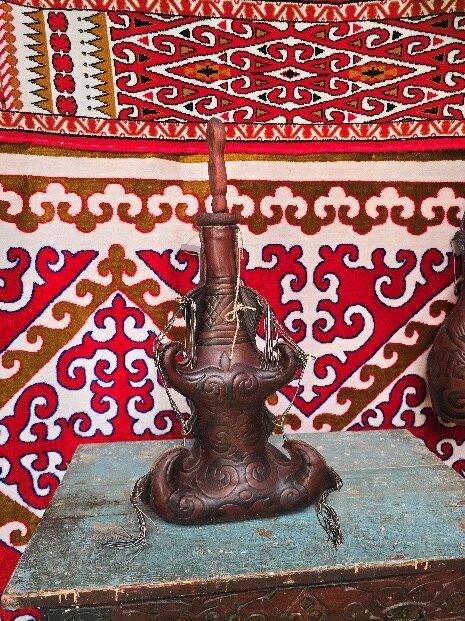
SABA is a large container (a wineskin that usually held 40–60 litres) for preparing and storing kumis. Saba is made from mare’s skin. It was hung in a yurt and tied with straps.The process of making saba has its own technological features. Saba is preferably made from the skin of a mare or stallion. The skin is kneaded and softened using a special method. The skin is thoroughly cleaned of meat, fat and film. Then it is soaked in salt water for 1–3 days, which helps to get rid of excess organic matter and partially softens the skin. Ileu is the tanning (softening) of leather, for which fermented milk products (ayran, sarysu), tree bark decoctions (willow, oak), animal liver or even ash solution were traditionally used. The skin is immersed in this solution and left for several days or even weeks, depending on the method. This made the skin soft and resistant to damage. The skin was then thoroughly kneaded by hand.A house with a saba was considered the home of a wealthy and respected family. Maintaining a saba was a sign of hospitality and cleanliness. In some regions, the saba was used in special rituals along with kumis. Analysing the shape and names of the parts of the saba, Z. Naurzbayeva believes that the vessel represents the image of the World Mother Mountain, and the process of churning butter or whipping kumis in it with a paddle is a sacred marriage, cosmogony (Naurzbayeva).The surface of the saba was decorated with ornaments that had a protective meaning — they symbolised prosperity, strength and fertility. Kesteli bau (embroidered braid) could be sewn along the seams of the saba or where the handles were attached. Zhibek zippen tigilgen keste — embroidery with silk threads — was used.In wealthy families, the saba could be decorated with zhezden, kumisten zhasalgan ornekti boleshketmen — decorative brass or silver details. The saba was often equipped with sturdy leather straps or woven ropes, which could also be decorated with tassels, knots or ornamentation. Some Kazakh clans had hereditary sabas that were passed down to subsequent generations.