
Er-toqym
Toktaruly
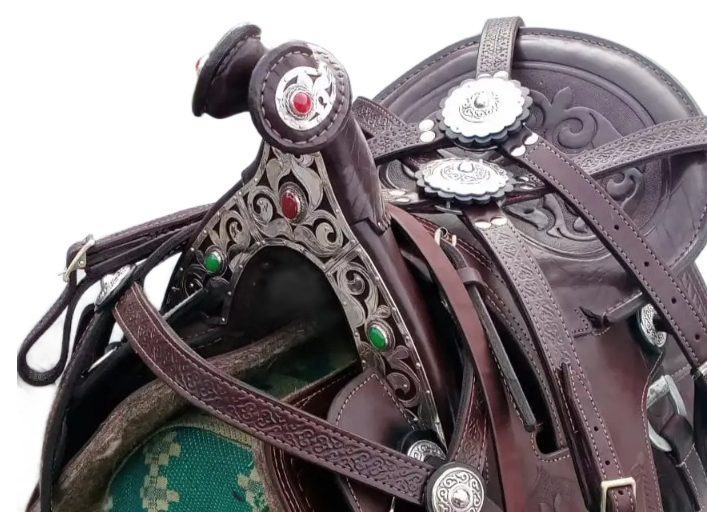
Kazakh saddles – er-tokym – are not only functional and comfortable, but many of them are considered works of art.The artistic design of the saddles includes wood carving, embossing and appliqué made of metal or leather, and inlaying with silver or copper plates. Ornamental motifs often repeat traditional Kazakh symbols, floral and geometric patterns, which have a protective and symbolic function, expressing the idea of strength, protection and well-being for the rider and his horse.The shape and decorative design of the er-tokym are subject to strict harmony: proportions, rhythm of lines and repeating motifs create visual unity and emphasise the craftsmanship of the artisan. Artistically, the er-tokym demonstrates a combination of functionality and aesthetics characteristic of nomadic culture, where utilitarian objects also serve as symbols of social status. There are male and female saddles. The former are usually more austere and laconic in form. Women’s saddles stand out for their elegant details and more refined artistic design: fine wood carving, filigree metalwork, silver plaques and floral patterns. Saddles have regional and tribal differences.