
Saukele
Velvet, silver, gilding, coral, carnelian, gold embroidery. A. Kasteyev National Museum of Arts of the Republic of Kazakhstan
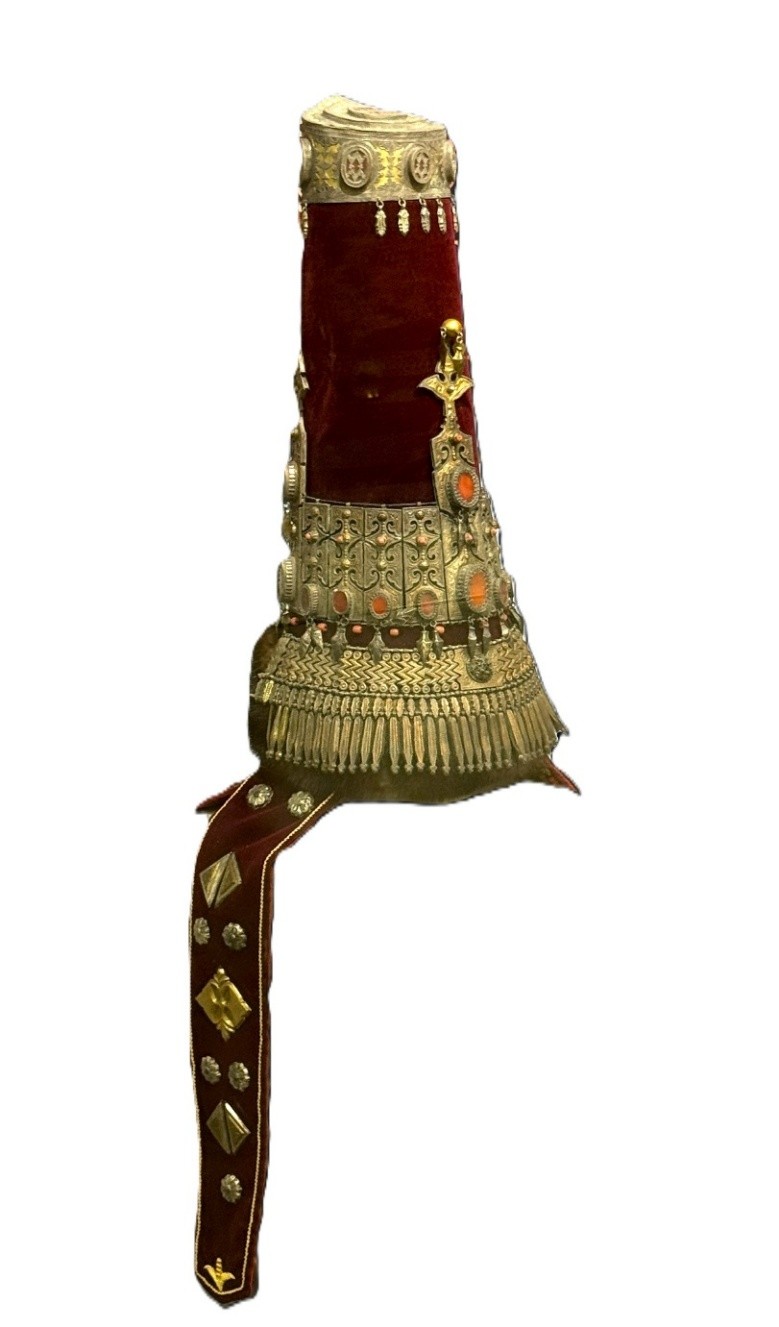
Saukele, a wedding headdress with jewelled decoration19th century, KazakhstanMaterials: velvet, silver, gilding, coral, carnelian. Techniques: stamping, engraving, granulation, gold embroideryThe item belongs to the category of traditional ceremonial and status-symbol headdresses, serving as a key element of the bride’s wedding attire and possessing a distinct symbolic function.The design consists of a tall conical headdress on a soft textile base (velvet), entirely covered with decorative metal plates and embroidery. The upper part features a domed top with an ornamental band. The main body is covered with fabric, over which metal plates are placed, secured around the perimeter and in the central areas. The lower edge is finished with a hanging fringe of metal elements. A long ribbon (zhelak), decorated with appliqué details, is attached to the side.The composition is structured along a vertical axis, with an upward-stretching form dominating. The decoration is arranged in tiers: the upper zone features a closed ornamental band; the middle zone comprises the textile base; the lower zone features a rich metal finish with pendants. The vertical orientation is emphasised by the distribution of decorative elements and the elongated shape of the piece.The ornamental scheme combines geometric and floral motifs. The metal plates are adorned with stamped and engraved ornamentation, incorporating round inserts of coral and carnelian that create colour accents. Gold embroidery complements the metal decoration, forming a complex textured surface. The lower fringe of pendants enhances the dynamism and creates an acoustic effect when in motion.The saukele served not only a decorative purpose but also a social and representational one, reflecting the family’s status and the significance of the wedding ceremony. The incorporation of gemstones and metal, as well as its multi-tiered structure, emphasise its sacred significance and its connection to beliefs regarding protection and well-being.