Traditional and contemporary art of Kazakhstan

A Virtual Journey into the World of Kazakhstan’s Artistic Heritage

This Web Gallery presents the diversity of artistic practices in Kazakhstan, reflecting the continuity of cultural traditions and the dynamic development of contemporary creative processes. The virtual exhibition features works based on national images, symbols, and themes, as well as artworks by contemporary artists who reinterpret the country’s cultural heritage through contemporary artistic forms, expressive means, and modern technologies.

The selected works demonstrate the relationship between traditional and contemporary art, revealing the distinctive features of the national worldview, cultural identity, and cultural meanings. The presented materials allow viewers to trace how elements of historical and cultural heritage are reflected in contemporary artistic practice, while maintaining their significance and relevance in an increasingly globalized world.

The Web Gallery is aimed at promoting Kazakhstan’s artistic heritage, expanding public access to works of art, and fostering a lasting interest in national culture and art among a wide audience.

Mural ‘City Dwellers’. Astana, 30 Mambetov Street. 2022. Photo from open sources

Creative group ‘air G’
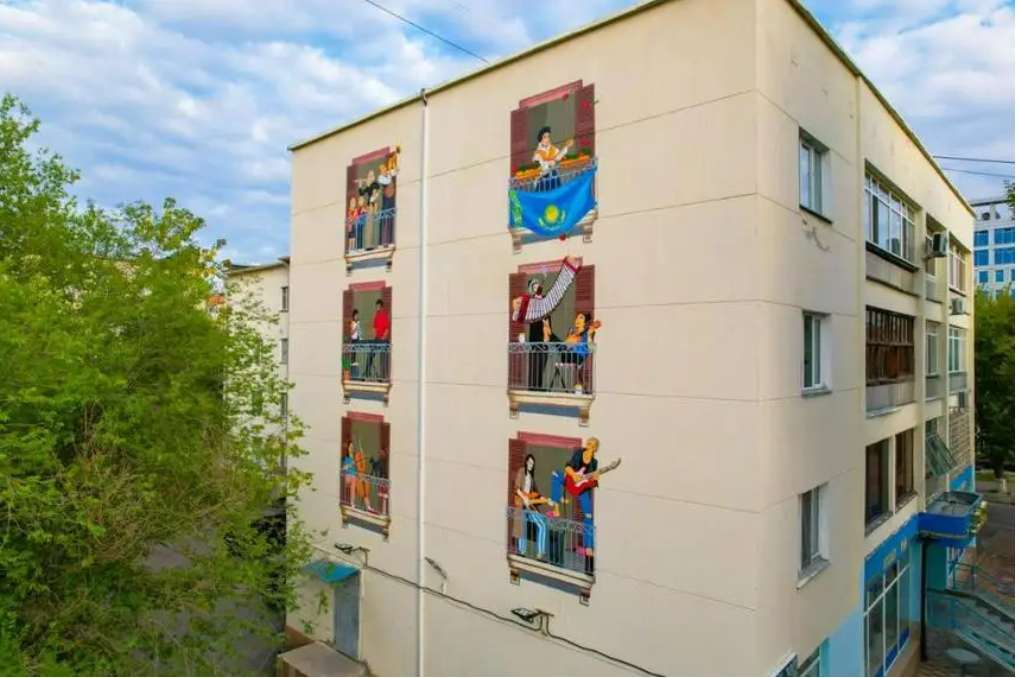
The visual language and composition of the art object appear, on the one hand, as a socially atomised narrative of the public body. On the other hand, its plot brings to life a kind of celebration that unites city dwellers into a single organism, a polyphonic orchestra, creating an idea of collectivity, shared experience, and a collective civic identity, expressed in the depiction of the national flag of independent Kazakhstan.The architecture of the building serves as a harmonious complement to the mural, acting as part of the narrative and ‘bringing to life’ the façade of the building. The solid space of the wall is ‘opened up’ by pseudo-balconies, upon which scenes of celebration by the building’s residents unfold. These ‘open’ openings serve as signs of chronotope, creating a communicative space in which the subject of the mural – the community of residents, empathising and participating – simultaneously creates an atmosphere of festive solemnity, inviting viewers to share in their joy.