Traditional and contemporary art of Kazakhstan

A Virtual Journey into the World of Kazakhstan’s Artistic Heritage

This Web Gallery presents the diversity of artistic practices in Kazakhstan, reflecting the continuity of cultural traditions and the dynamic development of contemporary creative processes. The virtual exhibition features works based on national images, symbols, and themes, as well as artworks by contemporary artists who reinterpret the country’s cultural heritage through contemporary artistic forms, expressive means, and modern technologies.

The selected works demonstrate the relationship between traditional and contemporary art, revealing the distinctive features of the national worldview, cultural identity, and cultural meanings. The presented materials allow viewers to trace how elements of historical and cultural heritage are reflected in contemporary artistic practice, while maintaining their significance and relevance in an increasingly globalized world.

The Web Gallery is aimed at promoting Kazakhstan’s artistic heritage, expanding public access to works of art, and fostering a lasting interest in national culture and art among a wide audience.

Tuskiz, 19th c. B. Aissayeva

SMA RK Collection. 184 –tk. Late 19th – early 20th centuries. Eastern Kazakhstan. Folk artist Aisaeva Bibi. Silk, felt, tiger skin, coloured threads, tambour stitch, gold embroidery
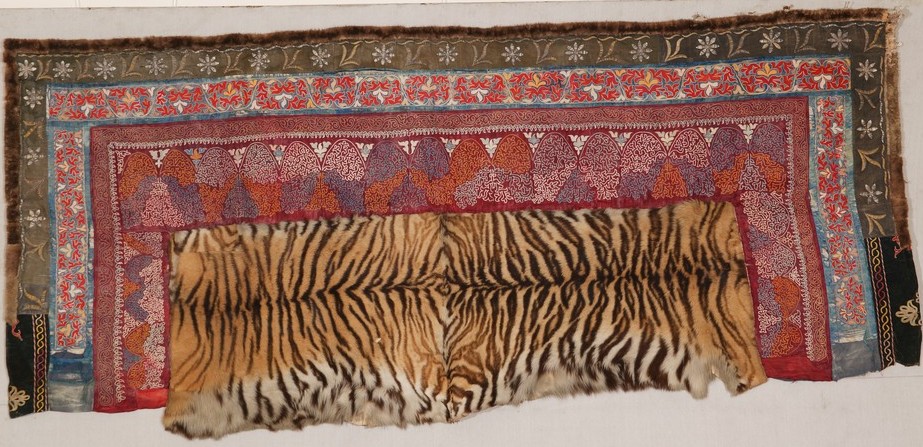
The distinctive feature of this piece is the use of a tiger skin, which lends the work a sense of status and symbolic significance. The composition is structured around a multi-tiered border design. The tiger skin occupies the central position, arranged horizontally to form the main compositional focal point. It is surrounded by several ornamental bands of textile and embroidery.The borders vary in scale and decorative character: the outer band contains larger ornamental elements, whilst the inner bands feature finer and denser ornamentation. This arrangement creates a sense of depth and enhances the decorative expressiveness of the piece.The ornamental scheme includes floral and geometric motifs. The repeating elements form a rhythmic structure and emphasise the horizontal extent of the composition.