
Syqyrlauyq
Private collection of S. Bashirov • Yurt door. Private collection of S. Bashirov • The door of a yurt – sykyrlaryk (interior view)
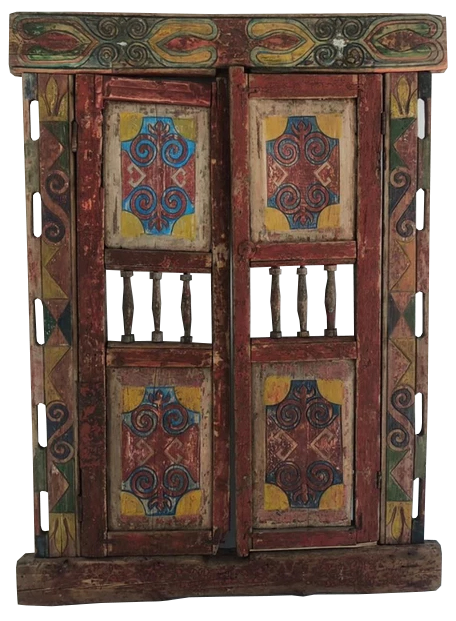
Sykyrlauyk is a double door for a yurt, most often decorated with carvings or paintings, bone inlays, and sometimes with different decorative techniques on both the inside and outside. The decoration of the doors is often determined by the rectangular shapes of the panels, which become a kind of background for ornamental compositions. The name of the door, sykyrlaik, translates as “creaky”. The craftsmen used oak, pine and other woods to make the doors. The multi-layered symbolism of the yurt door ornamentation reflects both Islamic and historical pre-Islamic folk sacred beliefs (Zoroastrianism, Tengriism, etc.). First and foremost, the door is a significant secret symbol of the separation of the inner world from the outer world, and the door ornamentation served a magical protective function. There is a great variety of sykyrlauykornamental compositions: simple blind panels; balusters made on a lathe were independent elements or combined with decorative motifs of contour or flat relief carving and painting, which were arranged in a straight or mesh pattern, or as medallions in the centre of the door composition. Plant motifs – trefoils – ush zhapyrak, palmettes, gul oyu – floral variations; vortex rosettes; geometric motifs – triangles, circles and other figures had complex worldview meanings. E.A. Masanov noted that the colour ornamental design, as well as the use of bone for the decoration of syqyrlau among the Turkic peoples of Central Asia, is more characteristic of the Kazakhs (Masanov 39). The doors were typically painted in red, blue, green and yellow, which had semantic meanings: red symbolised the sun, blue symbolised the sky, and green and yellow symbolised nature.