
Torsyk
Fund of the Central State Museum of Kazakhstan
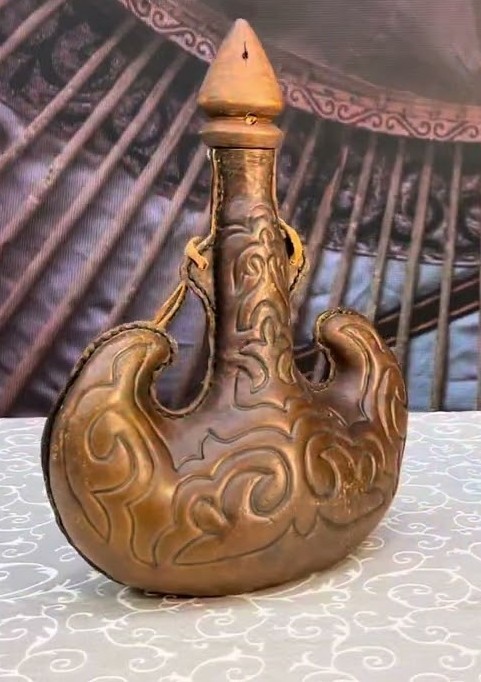
TORSYK is a classic Kazakh leather vessel designed for transporting kumis, ayran and other beverages. Most often, camel, bull or scraps of leather left over from the production of sabas were used. The leather was processed in the same way as when preparing material for making sabas: cleaning, ileu (tanning) and softening. The leather was soaked, then sewn along the edges and filled with sand or grains to give the vessel a voluminous shape, usually oval, oblong or teardrop-shaped, with a narrow neck that was convenient to carry in the hands, on a saddle or on the back. Its volume varies from small (1–2 litres) to large (5–10 litres and more). After drying, the torsyk is fumigated (ystaidy) with juniper to give it aroma and antiseptic properties to protect it from rotting.Torsyk was used on expeditions, hunting trips and journeys as a flask. For warriors and batyrs, it was part of their travel equipment. In epics and zhirau-zhyrlar, torsyk is mentioned as a batyr’s companion: “Torsyktagy kymyzin yiship, tulapryn tebindegen…”.In rituals and celebrations, the torsyk played both a utilitarian and symbolic role. Kymyz poured into a beautifully decorated torsyk symbolised the respect, honour and goodwill of the hosts. The vessel was passed from hand to hand with words of greeting and good wishes. During mass festivities and celebrations in yurts, drinks from the torsyk were served. This emphasised the connection with traditions and the continuity of generations. In the wedding ceremony, when the groom met the bride’s relatives or at the toya, the torsyk could be presented as a sign of blessing and prosperity. Sometimes it was included in the dowry as a symbol of the hearth and home, since torsyk symbolises prosperity, abundance, well-being and unity with nature.The neck of the torsyk is framed with a wooden or bone insert. The outside is decorated with patterns, often sewn in the form of artistic stitches. It is complemented by a carrying strap. It is decorated with traditional ornaments (koshkar muiiz, irek, aishyk, rhomb, etc.), which were applied by burning, embossing on leather, less often by embroidery with coloured threads, and inlaying with metal details. Torsyk, made by master craftsmen, was a source of pride and, when filled with drink, was served to guests. Torsyk was often decorated with metal elements, embossing on the leather, and Kazakh ornaments.