
The North Star, 2004 Qushqon: leather, embossingSource: Catalogue of the A. Kasteev National Museum of the Republic of Kazakhstan, ‘Decorative and Applied Arts of Kazakhstan’, 2025
Zhangir Umbetov and Amangul Ikhanova
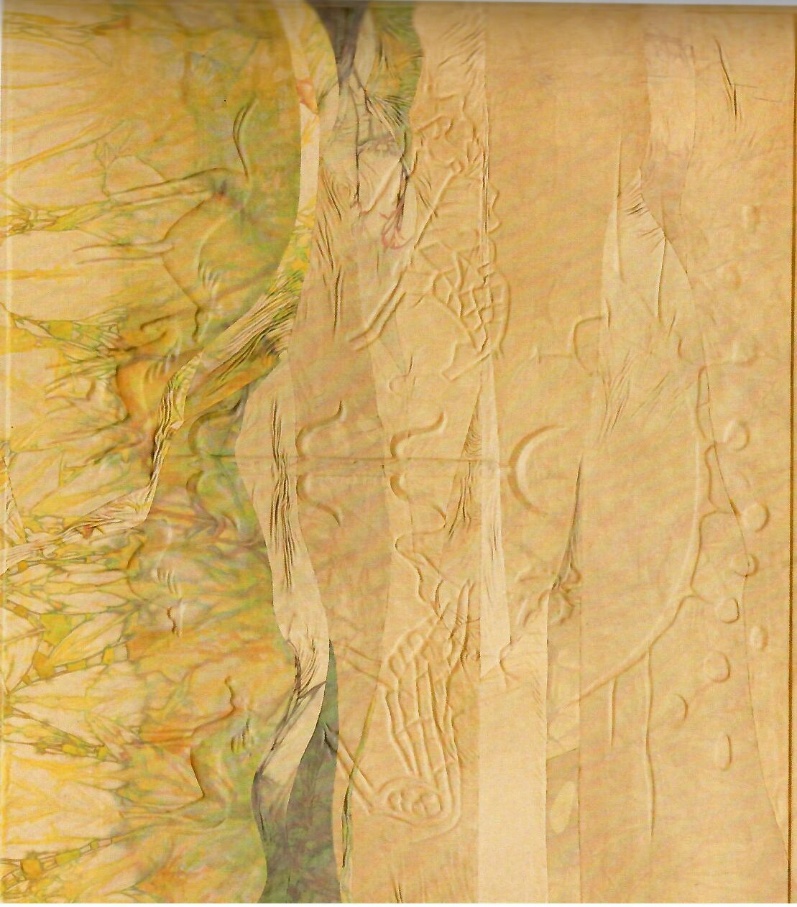
The ‘Temirqazyk’ panel is an artistic interpretation of one of the key cosmological images in the traditional Kazakh worldview. The composition is based on the ancient nomads’ concept of the structure of the universe, according to which the North Star is the immovable centre of the celestial sphere, around which other celestial bodies revolve. In folk tradition, Temirqazyk is associated with images of celestial horses, corresponding to the constellations of Ursa Major and Ursa Minor.The compositional centre of the work is a vertical, relief-like axis crowned by a crescent moon. This element is interpreted as a symbolic analogue of the World Tree (Axis Mundi), connecting the celestial, terrestrial and subterranean levels of the universe. Thanks to the expressive modelling of the leather, the central image takes on a monumental character and becomes the dominant motif of the entire composition.Depictions of horses — one of the most important archetypes of nomadic culture — occupy a significant place in the artistic structure of the panel. Their silhouettes are organically woven into the relief surface of the leather and are perceived as multi-layered symbolic images. In the upper registers of the composition, the horses resemble the mythological celestial companions of Temirqazyk, whilst in the lower part of the work they relate to the earthly expanse of the steppe, forming a link between the sacred and the real worlds.The artist’s unique leather-working technique lends the piece a particular expressiveness. The finest embossing, multi-layered relief and the material’s natural texture create a visual effect reminiscent of an ancient petroglyph or an archaic handwritten scroll. Leather serves not only as an artistic medium but also as a vessel of cultural memory, emphasising the work’s connection to the historical heritage of the Great Steppe.The colour scheme is based on a combination of golden-ochre, sandy and muted green shades. The soft, natural palette enhances the sense of contemplation and sacredness of the image, drawing attention to the philosophical content of the work.