
Art object, 2015. Wood, silver, lapis lazuli, carnelian, carving.
Serzhan Bashirov
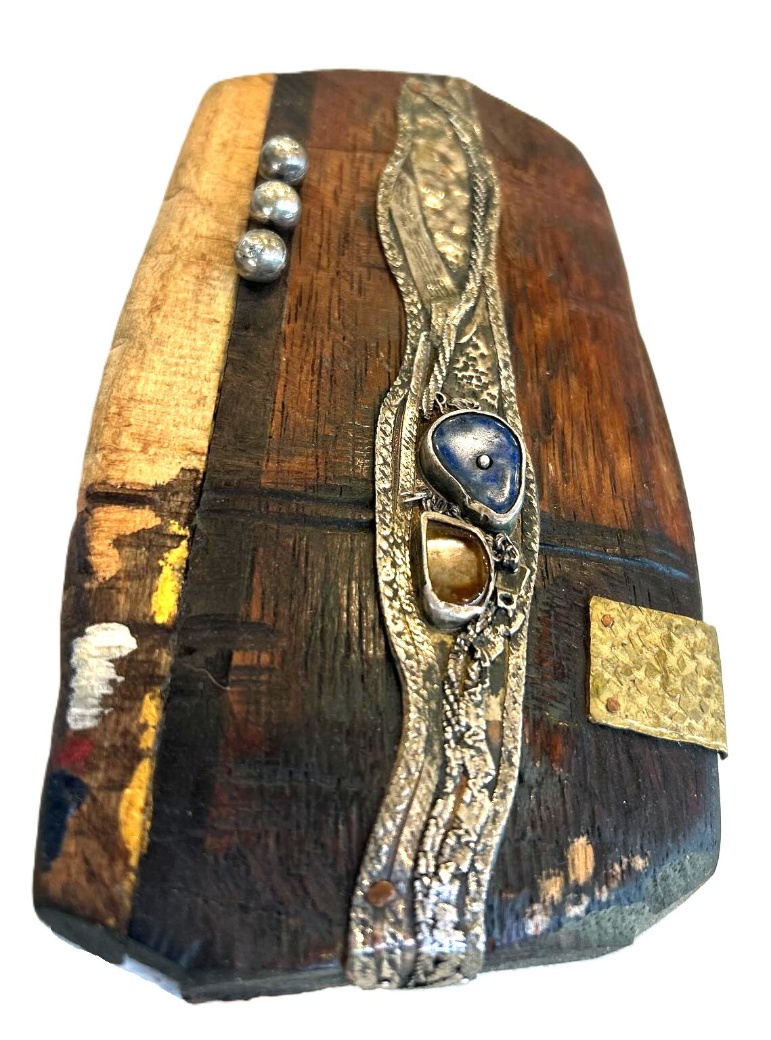
The contrast of materials becomes the key expressive principle of this art object, in which wood, metal and semi-precious stones are united into a single sculptural system. The work is constructed as a complex composition of interacting textures, where the natural mass of the wood is set against a delicate and dynamic metal structure.The wooden base retains a distinctly natural character: surface irregularities, traces of hand-working and the unevenness of the texture reveal the material’s natural origin and reinforce the sense of an organic foundation. The volume of the wood is treated not as a passive substrate, but as an independent sculptural form that defines the spatial character of the entire composition.A vertically oriented silver inlay forms the central axis of the piece and serves as the main compositional focal point. Its fluid silhouette and intricate texture create a striking contrast with the massiveness of the wood. The integration of lapis lazuli and carnelian enhances the decorative richness of the work and introduces additional colour accents, lending the composition a jeweller’s delicacy.Additional metal elements organise the surface rhythmically and form a multi-layered material environment. The interplay of wood, metal and stone creates the effect of a gradual transition from natural form to artistically transformed matter. As a result, the object is perceived as the outcome of a complex process of cultural transformation of the material.The work’s visual language lies at the intersection of decorative and applied arts, jewellery design and sculpture. The artist does not rank the materials by importance, but instead establishes an equal artistic dialogue between them. Here, wood symbolises the natural element and sustainability, whilst metal and stone introduce the motif of human intervention, processing and cultural interpretation.