Traditional and contemporary art of Kazakhstan

A Virtual Journey into the World of Kazakhstan’s Artistic Heritage

This Web Gallery presents the diversity of artistic practices in Kazakhstan, reflecting the continuity of cultural traditions and the dynamic development of contemporary creative processes. The virtual exhibition features works based on national images, symbols, and themes, as well as artworks by contemporary artists who reinterpret the country’s cultural heritage through contemporary artistic forms, expressive means, and modern technologies.

The selected works demonstrate the relationship between traditional and contemporary art, revealing the distinctive features of the national worldview, cultural identity, and cultural meanings. The presented materials allow viewers to trace how elements of historical and cultural heritage are reflected in contemporary artistic practice, while maintaining their significance and relevance in an increasingly globalized world.

The Web Gallery is aimed at promoting Kazakhstan’s artistic heritage, expanding public access to works of art, and fostering a lasting interest in national culture and art among a wide audience.

Figurine of a ram. 14th–15th centuries. Otrar

Pottery. 14th–15th centuries. Otrar. • Photo by Zh.N. Shaygozova
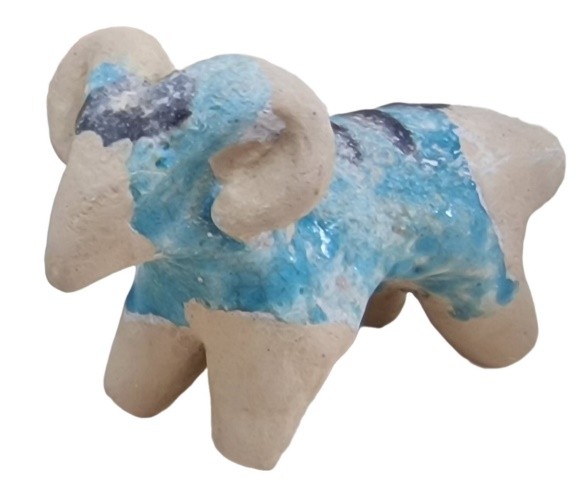
Zoomorphic figurines of birds and animals constitute a distinct group of medieval ceramic artefacts. Such items served not only a decorative function but also reflected a complex set of beliefs and cultic concepts. By the late medieval period, archaic religious beliefs had undoubtedly lost their original integrity and semantic richness, yet their echoes continued to exist in a transformed form. Such figurines can safely be described as a reminiscence of ancient cults.It is telling that the cult of the celestial ram retained its significance among the agricultural population of the Syr Darya region right up until the 20th century. Residents of urban settlements also preserved customs and beliefs that can be traced back to the Kangyu concept of the ‘farn-ram’, which found expression in the ritual practices of the Koshkar-ata festival.