
Feeling, 2024. Foam block. Almaty
Kurmangazy Kadyrov
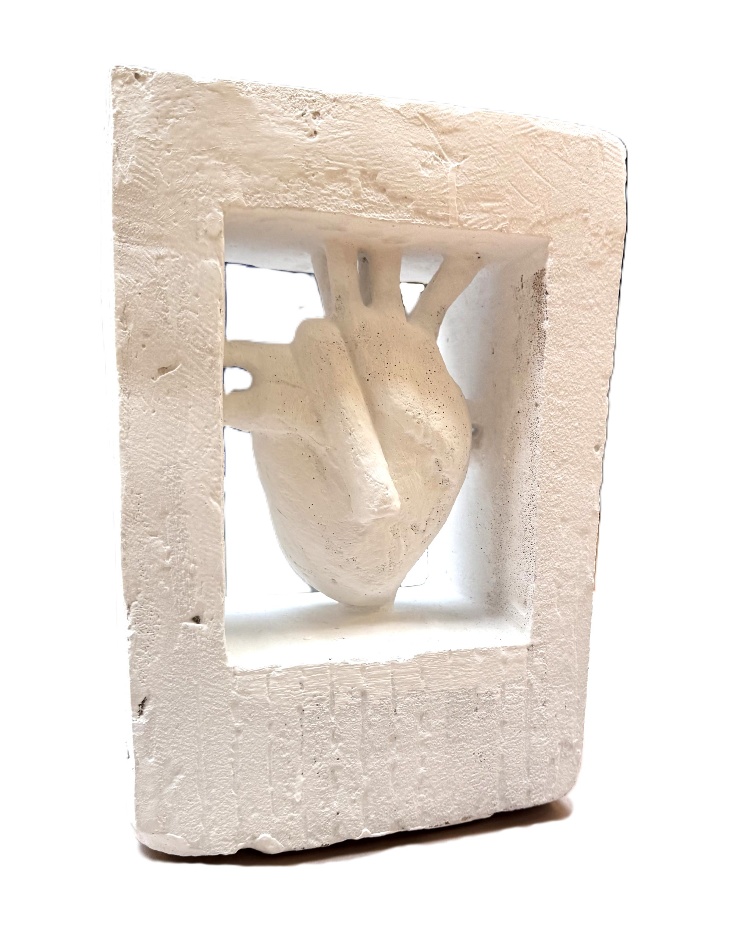
The work is based on the contrast between the organic form of the human heart and the rigid geometry of the surrounding structure. The sculpture is made of foam block—a material rarely used in traditional sculpture—which heightens the sense of fragility and the experimental nature of the artistic approach.The composition is built on the juxtaposition of the softly modelled volume of the heart and the rectangular geometric frame that confines the form’s space. The heart seems to strive to break free from the confines of the structure, creating a tension between its inner impulse and the external boundaries.The form of the central image is characterised by generalisation and slight deformation. Traces of manual processing preserve a sense of physicality and emotional vulnerability, whilst the porous texture of the foam block emphasises the object’s instability and material fragility. As a result, the material becomes not merely a technical medium, but also part of the work’s semantic structure.The organisation of space plays an important role: the voids within the geometric form function as an active compositional element. Light passing through the cut-out planes heightens the drama and focuses attention on the central figure.The work’s thematic content relates to the theme of inner experience and the quest for liberation. The geometric structure can be perceived as a symbol of external constraints—social, psychological or cultural—whilst the heart becomes the vessel of individual emotional experience.