
Adyraspan, 2015. Wool, felting
Raushan Bazarbaeva
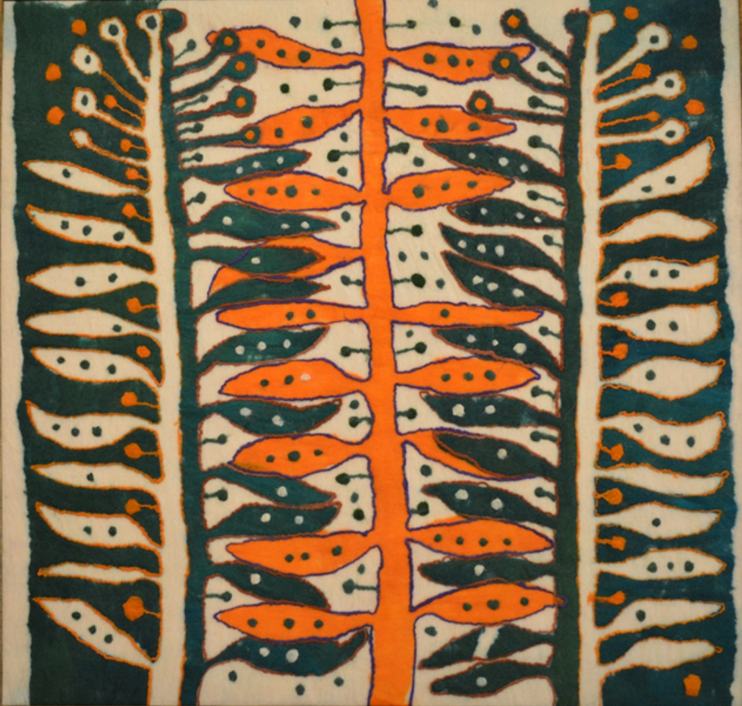
‘Adyraspan’ is an example of contemporary Kazakhstani ethno-modernism. The title itself refers to the image of the adyraspan—a plant that, in Turkic culture, serves a protective and purifying function. From a semiotic perspective, the adyraspan acts as a symbol of protection, spiritual purification and the human connection to the sacred world of tradition.The texture of the wool fibres creates an effect of internal vibration within the form, whilst the multi-layered nature of the material enhances the sense of organic growth and natural dynamism.The composition is structured vertically and resembles the archetypal structure of the Tree of Life. The three main stems form the symbolic axis of the work and can be interpreted as a model of the trinity of worlds—the heavenly, earthly and underworld—or as a symbol of the continuity of generations. The repetitive rhythm of the leaves creates a meditative structure reminiscent of the ornamental thinking found in traditional art. The inner dots within the leaves resemble seeds or fruits, serving as symbols of life force, fertility and hidden potential.The colour scheme is based on the contrast between rich orange, dark green and white. The colour orange is associated with solar energy, fire and purification, whilst the deep, dark shades emphasise the plant’s mystical and protective nature. The white background enhances the sense of sacred purity and visually highlights the central forms, transforming the composition into a kind of textile amulet.