
Set of wooden tableware. Wood, carving, turning.
Esenkeldy Kulzhabayev
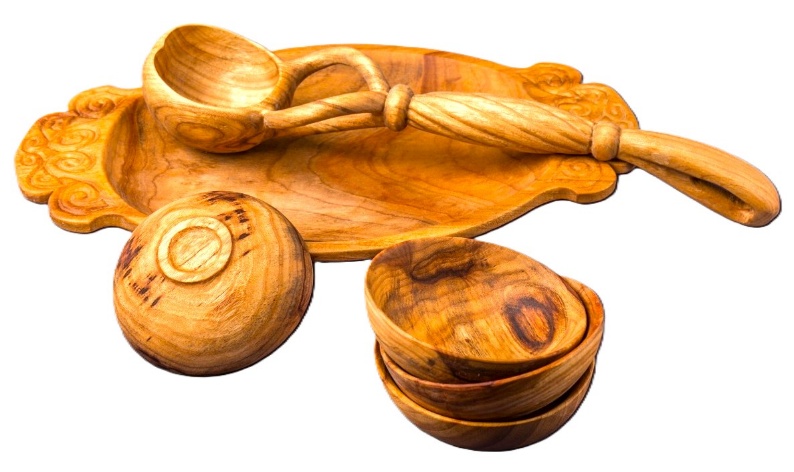
The set of wooden utensils is structured as a unified sculptural system, in which an everyday object acquires the qualities of an artist’s decorative piece. The bowls, serving dish and spoon are united by a single artistic concept and are perceived not as separate elements of the set, but as an interconnected ensemble based on a shared rhythm of form and texture.The artistic expressiveness of the pieces is largely determined by the natural qualities of the wood. Contrasting grain, the material’s natural pattern and the warm tone of the surface become an important part of the visual image. The artist avoids excessive decorative richness, focusing instead on the plasticity of form and the intrinsic aesthetics of the wood itself.The silhouettes of the objects are characterised by the smoothness and fluidity of their lines, giving these utilitarian items an almost sculptural quality. Particularly striking is the spoon with its elongated handle, where the functional form evolves into an independent sculptural element. The carved decoration around the edges of the dish is understated and organically integrated into the structure of the object, without disrupting the purity of the silhouette.A key feature of the work is the fusion of traditional craftsmanship and a contemporary artistic approach. The objects retain their practical purpose, yet the quality of workmanship, compositional harmony and attention to material culture elevate them into the realm of exhibition decorative and applied art.