Traditional and contemporary art of Kazakhstan

A Virtual Journey into the World of Kazakhstan’s Artistic Heritage

This Web Gallery presents the diversity of artistic practices in Kazakhstan, reflecting the continuity of cultural traditions and the dynamic development of contemporary creative processes. The virtual exhibition features works based on national images, symbols, and themes, as well as artworks by contemporary artists who reinterpret the country’s cultural heritage through contemporary artistic forms, expressive means, and modern technologies.

The selected works demonstrate the relationship between traditional and contemporary art, revealing the distinctive features of the national worldview, cultural identity, and cultural meanings. The presented materials allow viewers to trace how elements of historical and cultural heritage are reflected in contemporary artistic practice, while maintaining their significance and relevance in an increasingly globalized world.

The Web Gallery is aimed at promoting Kazakhstan’s artistic heritage, expanding public access to works of art, and fostering a lasting interest in national culture and art among a wide audience.

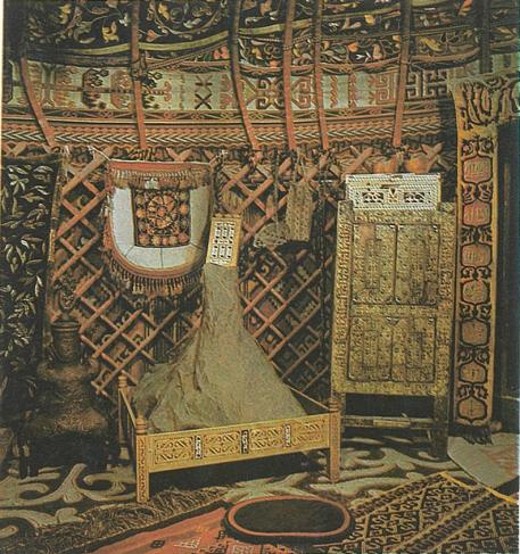
Saba ayak

Saba ayak is a special wooden stand on legs for churning and storing kumis in the largest leather vessel, saba, made of smoked horsehide. In the upper part of the saba in the photo, you can see the head of a wooden pispek churn, decorated with plates of ornamented bone. The saba ayak was placed in the women’s half of the yurt, near the entrance. “The names of the parts of the saba, the proverbs and sayings associated with it, and the rituals identify the saba, the woman-mother and the mare. The saba appears as an image of the World Mother Mountain, and the process of churning butter or whipping kumis in it with a churn is seen as a sacred marriage, cosmogony. This rich mythological symbolism of the saba allowed it to become a bearer of symbolic capital” (Naurzbaeva).