
The Victor, 2024. Ceramic, glaze. Almaty
Indira Ozbekova
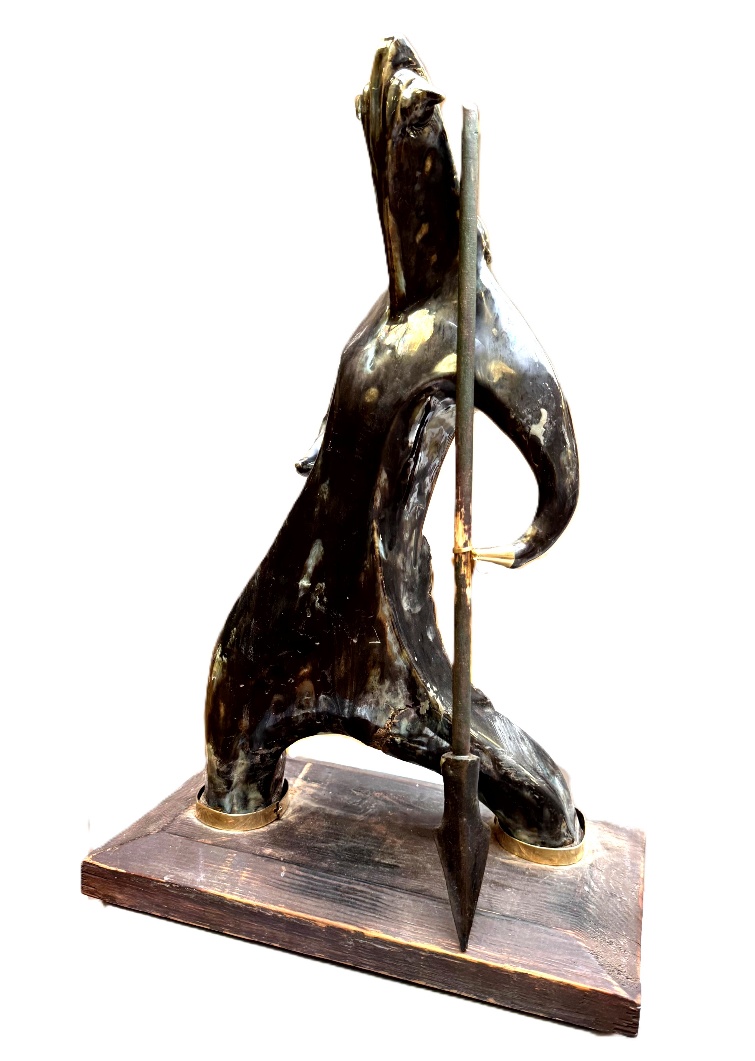
The image of the ‘Winner’ is rendered in the work through concise and generalised form, where the human figure takes on a symbolic resonance. The use of ceramics and glaze lends the composition a particular softness of modelling and allows the expressiveness of the surface to be emphasised.The figure is posed in a state of internal tension: the torso leaning backwards and the legs spread wide create a sense of stability achieved through effort and resistance. The vertical line of the spear organises the composition’s space and becomes its semantic and rhythmic centre, maintaining the balance of the entire form.The sculptural language of the work is based on the fluidity of volumes and a rejection of detailed anatomy. The body is perceived as a single mass with smooth transitions, whilst individual elements—the line of the back, the gesture of the hand, the turn of the head—are highlighted more emphatically, forming an expressive silhouette. Thanks to this, the image retains both its conventionality and emotional tension.The texture of the glazed surface plays a special role. The transitions between glossy and matt areas create the effect of living, changing matter. The unevenness of the finish and traces of handwork emphasise the work’s authorial character and enhance the sense of sculptural immediacy.The meaning of the composition is linked not so much to the theme of external victory as to the idea of inner triumph. The absence of individualised features places the figure within the realm of a universal image of a person who has achieved their goal through willpower and inner fortitude. The spear is perceived as a symbol of purpose, strength and spiritual concentration. Emotional expressiveness is achieved through the rhythm of the form, the texture of the material and the symbolic richness of the image.