
Rug, 1970. K. Abdukarimova
Sarsenbayeva. 1960. • Footstool (Ayak qapu). Felt, fulling, embroidery. • From the collection of the A. Kasteev National Museum of Arts of the Republic of Kazakhstan (241-b).
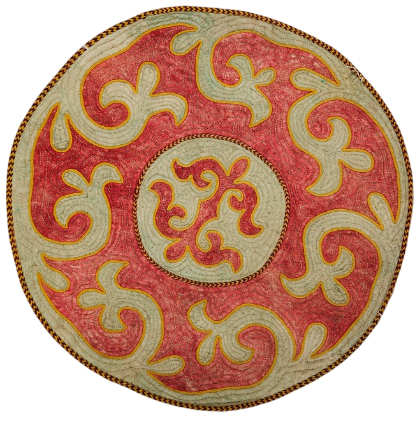
The piece is made of thick, light-coloured felt, which serves as a sturdy base for the intricate, multi-layered decoration. Art historical analysis reveals a distinct geometric structure to the composition: the central field is occupied by a diamond-shaped medallion, framed by several borders, creating the effect of a ‘window’ or portal. The main decorative motifs are the ‘muyiz’ and the spiral ‘irek’ scrolls, executed in delicate outline embroidery in a soft pink and brown colour scheme. The rhythmic repetition of the patterns around the perimeter lends the piece dynamism and visual stability. What makes this ayak qapu particularly unique is its rich, textured finish: the edges of the bag and the flap are adorned with long, lush fringes of dyed wool, alternating shades of ochre, terracotta and muted green. These colour accents not only enliven the austere geometry of the embroidery, but also carry deep symbolism of blossoming nature and the vital energy of the steppe. Decorative tassels (shashak), attached to the ends of the cords, complete the ensemble, lending the item an air of elegance and solemnity.