Traditional and contemporary art of Kazakhstan

A Virtual Journey into the World of Kazakhstan’s Artistic Heritage

This Web Gallery presents the diversity of artistic practices in Kazakhstan, reflecting the continuity of cultural traditions and the dynamic development of contemporary creative processes. The virtual exhibition features works based on national images, symbols, and themes, as well as artworks by contemporary artists who reinterpret the country’s cultural heritage through contemporary artistic forms, expressive means, and modern technologies.

The selected works demonstrate the relationship between traditional and contemporary art, revealing the distinctive features of the national worldview, cultural identity, and cultural meanings. The presented materials allow viewers to trace how elements of historical and cultural heritage are reflected in contemporary artistic practice, while maintaining their significance and relevance in an increasingly globalized world.

The Web Gallery is aimed at promoting Kazakhstan’s artistic heritage, expanding public access to works of art, and fostering a lasting interest in national culture and art among a wide audience.

Мурал из серии «Шексіздік» («Бесконечность»). Просп. Сарыарка, 38, г. Астана. Фото из личного архива Б. Асемкула. https://vlast.kz/gorod/60212-stolicnye-graffiti.html

Художник Бейбит Асемкул
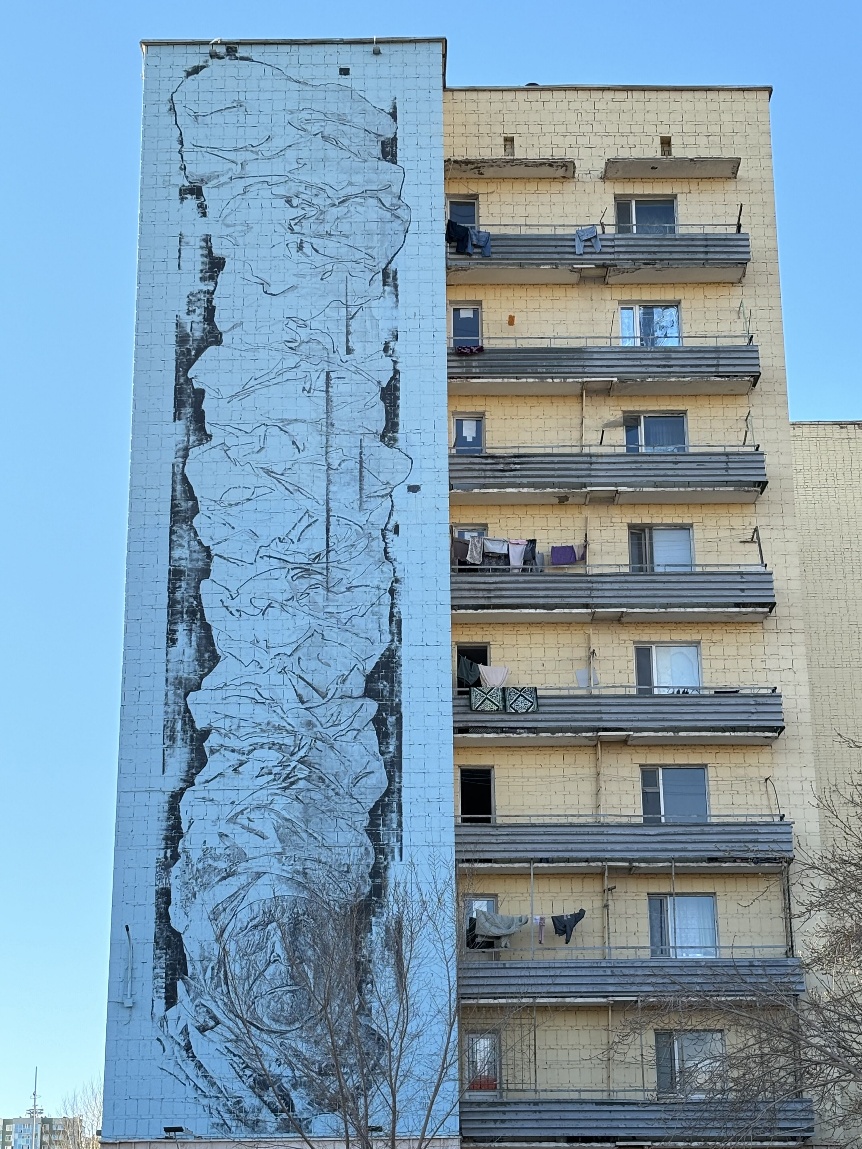
Монументальный арт-объект выполнен в графической манере, напоминающей академический рисунок углём или мягким карандашом. Композиция мурала представляет собой выражение благодарности своим матери художника, выросшего в многодетной семье.Глубокие морщины лица пожилой женщины в многослойном головным убором создают ощущение внутренней силы и пережитого опыта. Ее образ актуализирует само Время и Память. Драпировка восходящего ввысь, к небесам головного убора связывает женский образ с Верхним божественными Миром. Работа производит производит сильное впечатление, в особенности за счёт сочетания почти монохромной графики и психологической выразительности образа. Его визуальный язык создает ощущение с одной стороны человеческой уязвимости, с другой – достоинства и следов пережитого.