
Motherhood, 2023. Bronze, stone. Almaty
Malik Zhunisbek
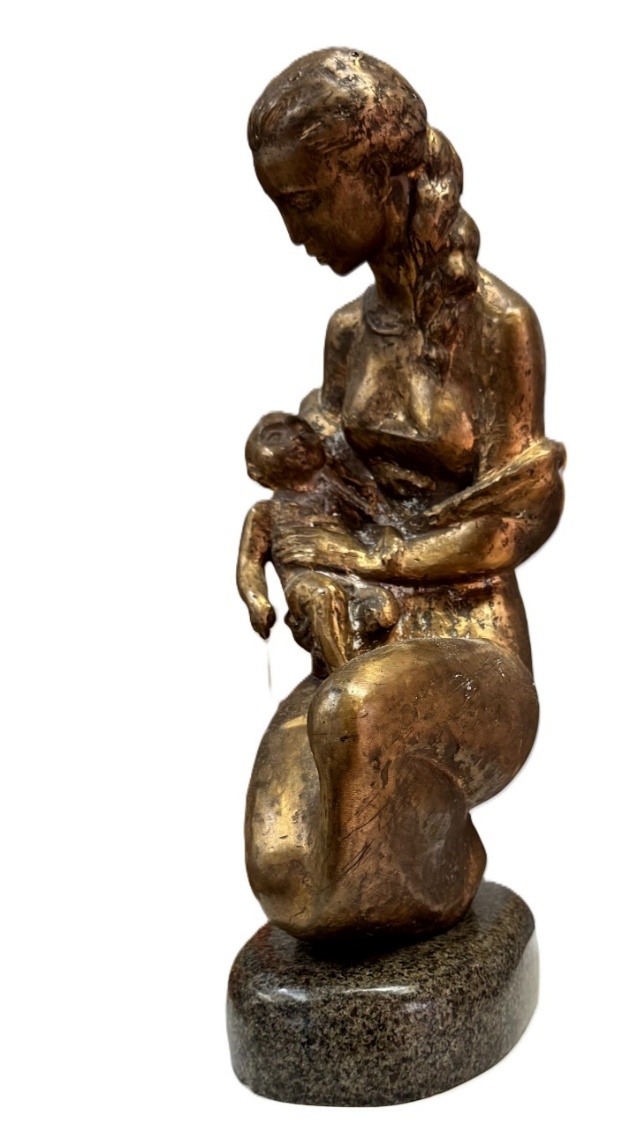
The work explores the theme of motherhood through a concise and emotionally focused sculptural form. The bronze figure of a woman with a child is unified into a single compact form, where smoothly flowing lines create a sense of security, inner unity and tranquillity. The stone base reinforces the stability of the composition and emphasises its monumental integrity.The sculpture is built on the generalisation and softness of the forms. Anatomical details are kept to a minimum, allowing the focus to lie not on external description but on the emotional state of the figure. The tilt of the head, the gesture of the hands and the position of the child form an enclosed space of care and inner closeness. The flowing silhouette lends the composition harmony and a sense of continuity in its sculptural rhythm.The surface of the bronze combines smooth areas with rougher zones that retain traces of hand-finishing. Light, interacting with the texture of the metal, brings the form to life and enhances its material expressiveness.The figure is devoid of individual features and thus takes on an archetypal character. Motherhood is interpreted here as a universal symbol of life, continuity and spiritual resilience, which is particularly significant in the context of traditional Kazakh culture.