
‘Zhaylau’ bracelet, silver; casting, engraving, embossing. Source: the artist’s Instagram page — @kazakov_jewelry
Ilya Kazakov
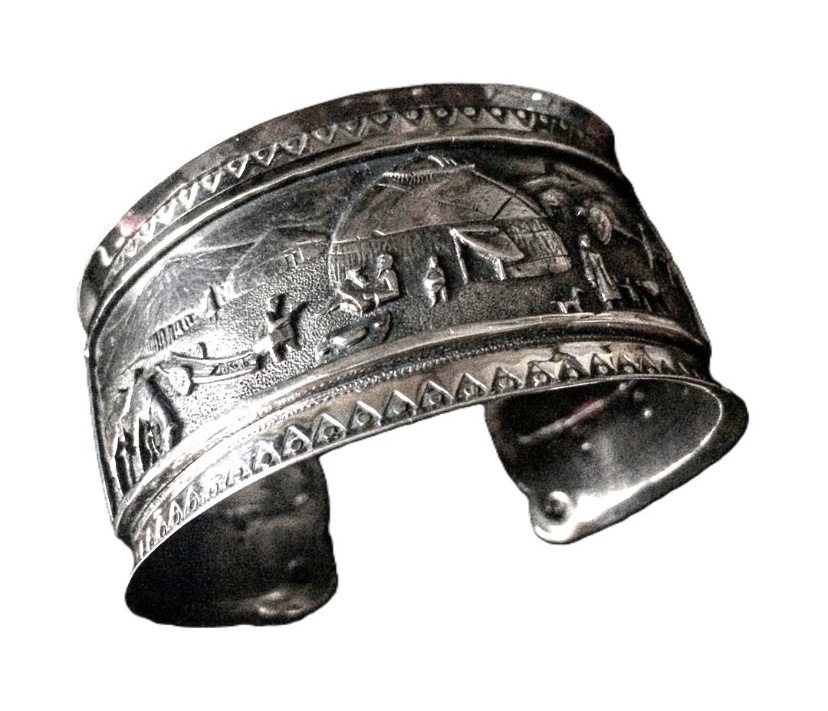
The wide, open-style bracelet is crafted as a single metal plate, ensuring the stability and monolithic nature of the structure. The open design ensures comfort whilst emphasising the integrity of the composition.The surface of the piece is organised as a horizontal frieze running along the entire length of the bracelet. The central field is filled with relief scenes of nomadic life: images of yurts, human figures, animals and elements of the steppe landscape. The upper and lower edges are decorated with ornamental bands featuring geometric patterns, which structure the space and create compositional boundaries.The narrative nature of the relief takes on particular significance. The zhaylau scenes are perceived as a visual representation of a traditional way of life based on the harmonious coexistence of humans, nature and the nomadic environment. As a result, the bracelet fulfils not only a decorative function but also becomes a bearer of cultural memory associated with notions of steppe identity.The use of a relief image brings the piece closer to a small sculptural form and enhances its artistic expressiveness. As a result, the bracelet is perceived as a synthesis of jewellery art and visual storytelling, where ornamentation is combined with cultural and historical content.