
Qos bilezik
Eastern Kazakhstan. Silver, cast, embossed. A. Kasteyev National Museum of Arts of the Republic of Kazakhstan
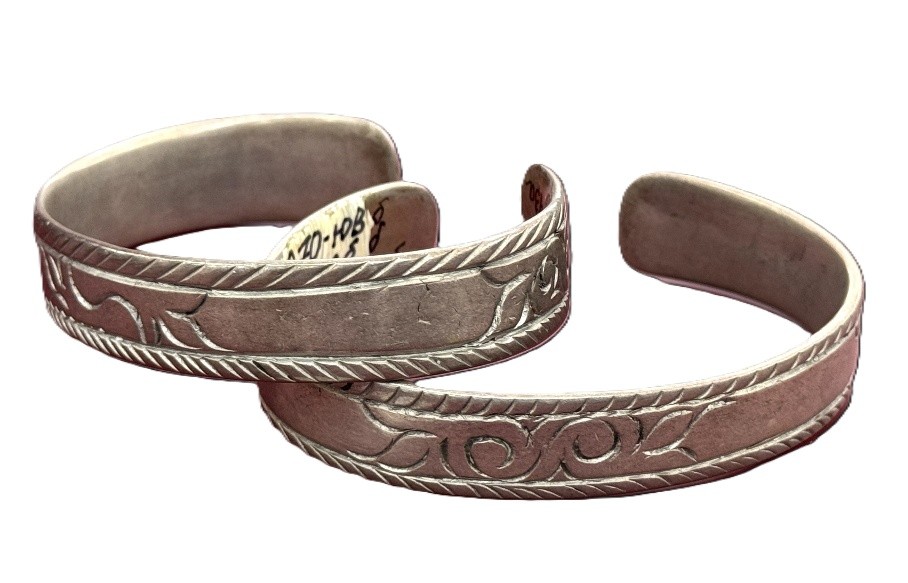
The Kos Bilezik is a pair of open-style wrist ornaments characteristic of the 20th-century jewellery tradition of East Kazakhstan. The piece belongs to the category of everyday decorative jewellery and is distinguished by the compositional unity of the pair.The material is silver; the technique involves casting and embossing. The ornamentation is created through relief hammering and linear detailing of the surface, without the use of inlays or applied elements.The design consists of two identical bracelet forms with an open base. Each piece has a flat-curved profile with gently flared ends, ensuring comfort when worn. The paired nature of the pieces implies their simultaneous use, which enhances the decorative effect.The composition is based on a linear frieze principle and extends across the entire surface of the bracelet. The central field features a floral ornamentation in the form of gently curving shoots and scrolls. Along the edges run relief bands with diagonal incisions, forming a frame and emphasising the length of the form.The ornamental scheme is characterised by rhythm and symmetry. Floral motifs are combined with linear geometric decoration, forming a balanced composition. The absence of colour accents is compensated for by the clear plasticity of the relief and the contrast of light and shadow, which lends the pieces a restrained yet expressive decorative quality.