
Rhinoceros, 2023. Steel, cable. Almaty
Eduard Kazaryan
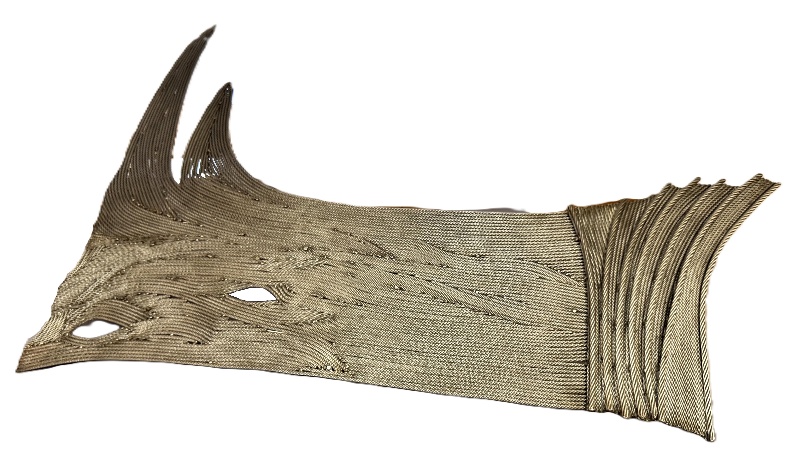
The stylised image of the rhinoceros is realised in the work through the principle of linear plasticity and constructive modelling of form. The use of steel and metal cable defines the visual character of the work, where the massive animal is transformed into a light spatial structure.The composition is constructed in a horizontal format with an extremely generalised silhouette. The contours of the head and horn are immediately recognisable, whilst the body is reduced to a system of dense parallel lines. As a result, attention shifts from the material mass to the rhythm and graphic organisation of the form, creating the effect of a ‘drawing in space’.The plastic structure of the work is based on the repetition of metal cables, which define a single direction of movement. The head is distinguished by a more complex configuration of lines, which enhances the expressiveness of the image and emphasises the horn as the main compositional element.The texture is formed by the material itself: the intertwining of the cables creates a dynamic linear surface that actively interacts with light. As the viewing angle changes, the sculpture appears mobile and visually fluid, despite the stability of the structure. The contrast between the rigidity of the steel and the fluidity of the silhouette heightens the internal tension of the form.