
Bracelets, silver; casting, forging, engraving, blackening. Photo: A. Ibragimov, the artist’s studio
Bekbolat Nurdambek
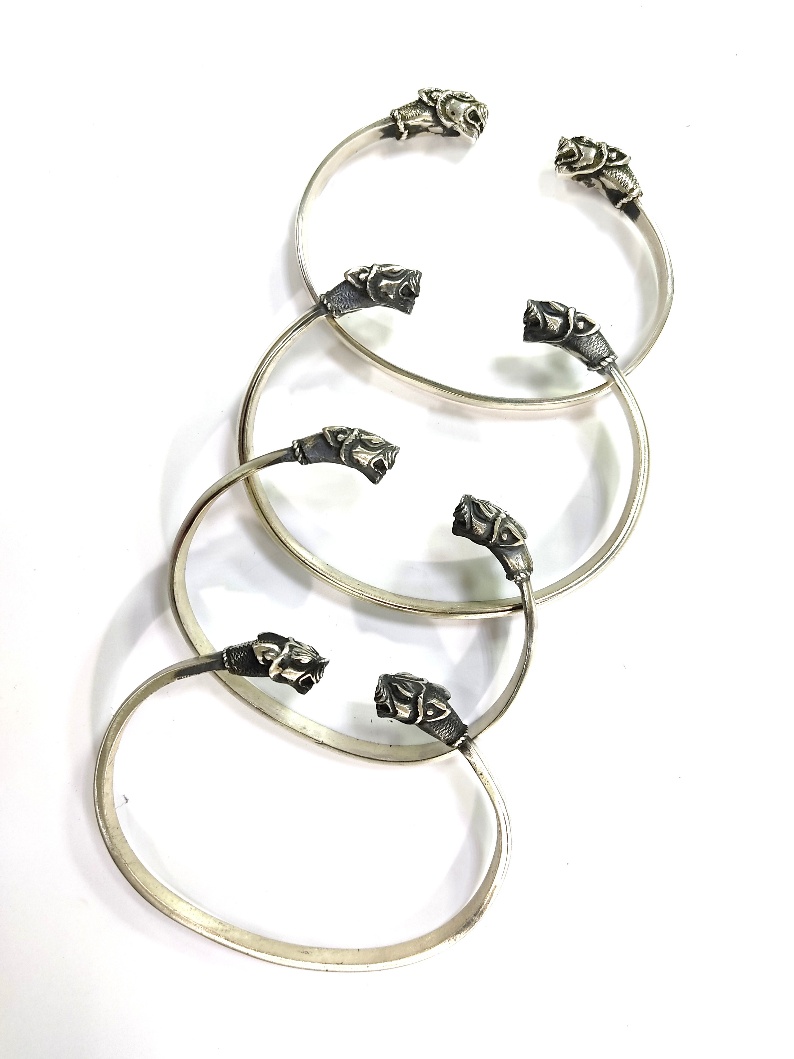
This series of open-ended bracelets is based on the classic form of a rigid hoop with accentuated zoomorphic ends. The concise design retains functional simplicity, yet the sculptural treatment of the ends lends the pieces a distinct sculptural character.The main artistic focus is on the stylised heads of a predatory animal that form the ends of the bracelets. Against the backdrop of the smooth and almost minimalist surface of the main ring, these elements appear particularly striking. Three-dimensional modelling, detailed texture and dynamic form create a sense of inner strength and dynamism. The repetition of the overall form across the different variations in the series allows for a unified artistic concept to be maintained despite the sculptural differences.The reference to the image of a predator is linked to the tradition of the ‘animal style’ characteristic of the cultures of the Eurasian steppes. Zoomorphic motifs here are associated with notions of strength, protection and martial energy. The open form of the bracelet enhances the sense of movement and interaction, whilst the opposing heads form a tense compositional axis.The artist deliberately reduces the ornamental load, focusing attention on the expressiveness of form and the plasticity of the sculptural element. As a result, the bracelets are perceived not only as jewellery, but also as objects of contemporary designer art that maintain a connection with traditional symbolic language.