
Dombyra, 21st century. Wood, carving, inlay.
Zholaushy Turdygulov
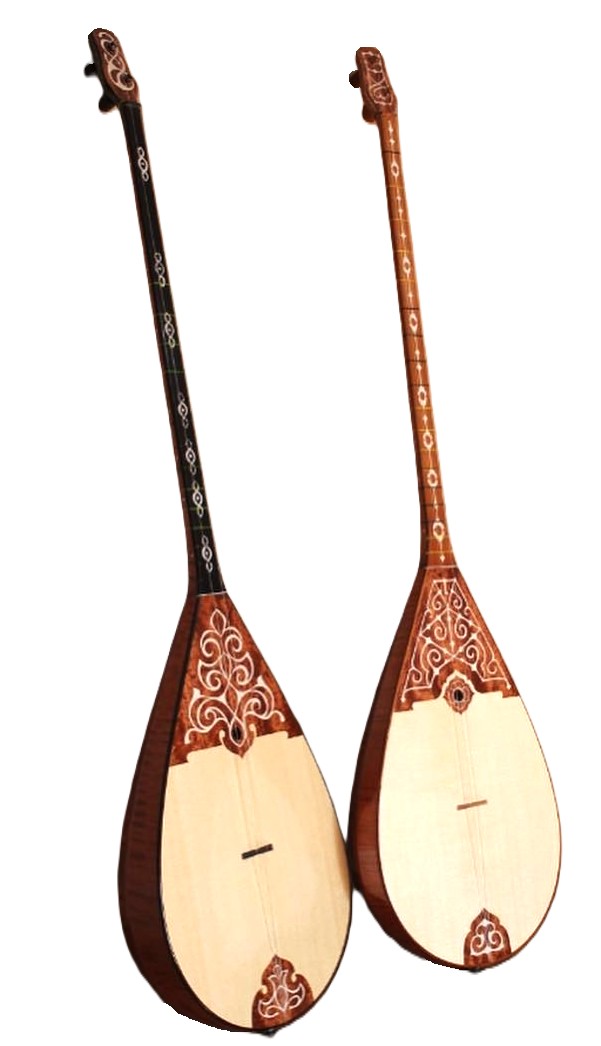
The work is a traditional Kazakh musical instrument, crafted from wood with decorative carving and inlay elements. The dombra’s design retains its classic form: an elongated neck, teardrop-shaped body and simple soundboard, ensuring continuity with the historical model of the instrument.The plasticity of the form is characterised by restraint and functional necessity, yet the artistic expressiveness is concentrated in the decorative treatment of the surface. The ornamental scheme is situated primarily on the upper part of the body and on the neck, creating compositional accents. The motifs used—spiral scrolls, geometric elements and traditional Kazakh ornaments—are arranged in a rhythmically organised structure.The contrast between the light-coloured soundboard and the darker elements of the body enhances the visual expressiveness and emphasises the compositional articulation of the form. The inlay serves not only a decorative function but also an accentual one, highlighting key areas of the instrument.In terms of meaning, the dombra functions not only as a musical instrument but also as a symbol of cultural identity. The piece demonstrates a trend characteristic of contemporary Kazakhstani decorative and applied art: the preservation of the canonical form of the whilst simultaneously complicating the ornamental structure and enhancing the aesthetic expressiveness of the object.