Traditional and contemporary art of Kazakhstan

A Virtual Journey into the World of Kazakhstan’s Artistic Heritage

This Web Gallery presents the diversity of artistic practices in Kazakhstan, reflecting the continuity of cultural traditions and the dynamic development of contemporary creative processes. The virtual exhibition features works based on national images, symbols, and themes, as well as artworks by contemporary artists who reinterpret the country’s cultural heritage through contemporary artistic forms, expressive means, and modern technologies.

The selected works demonstrate the relationship between traditional and contemporary art, revealing the distinctive features of the national worldview, cultural identity, and cultural meanings. The presented materials allow viewers to trace how elements of historical and cultural heritage are reflected in contemporary artistic practice, while maintaining their significance and relevance in an increasingly globalized world.

The Web Gallery is aimed at promoting Kazakhstan’s artistic heritage, expanding public access to works of art, and fostering a lasting interest in national culture and art among a wide audience.

Green Earth, Weaving, wool, chii.

Saule Bapanova
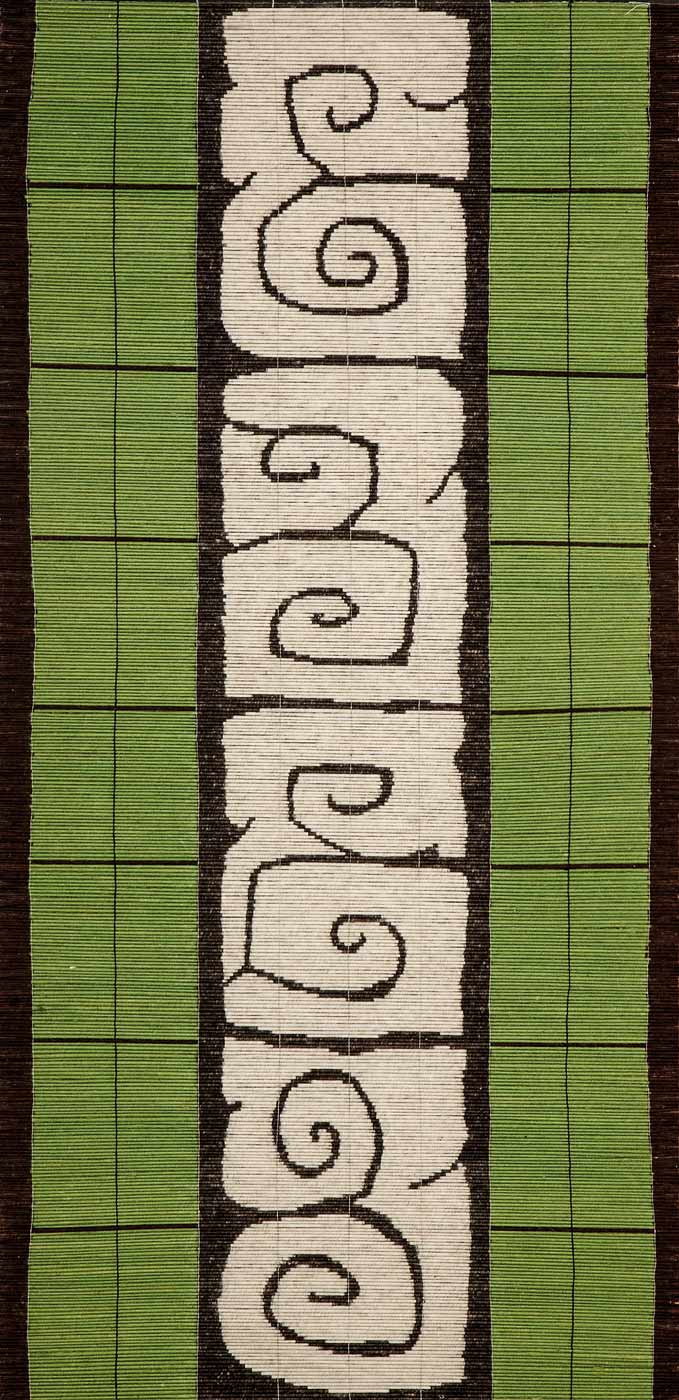
The work is built on the interplay between organic ornamentation and a strict geometric structure, forming an image of nature as an ordered yet living system. At the centre of the composition is a vertical row of spiral-shaped elements, which in Kazakh tradition are associated with the idea of infinite motion, the cyclical nature of time and the continuous renewal of life. These forms resemble sprouting grains or young shoots, giving the composition the significance of a symbolic act of birth and growth.The elongated format evokes associations with the World Tree, a ritual pillar or an architectural column connecting the earthly and heavenly realms. This structure lends the composition a sense of stability and an internal axis around which the entire visual rhythm is organised.The colour scheme plays a particular role. The green background symbolises spring renewal, fertility and the vital energy of the steppe landscape. The contrast between the light and brown elements in the central part of the composition creates a sense of balance and stability.