
Balbal, 2024. Bronze, stone. Almaty
Altai Beisenov
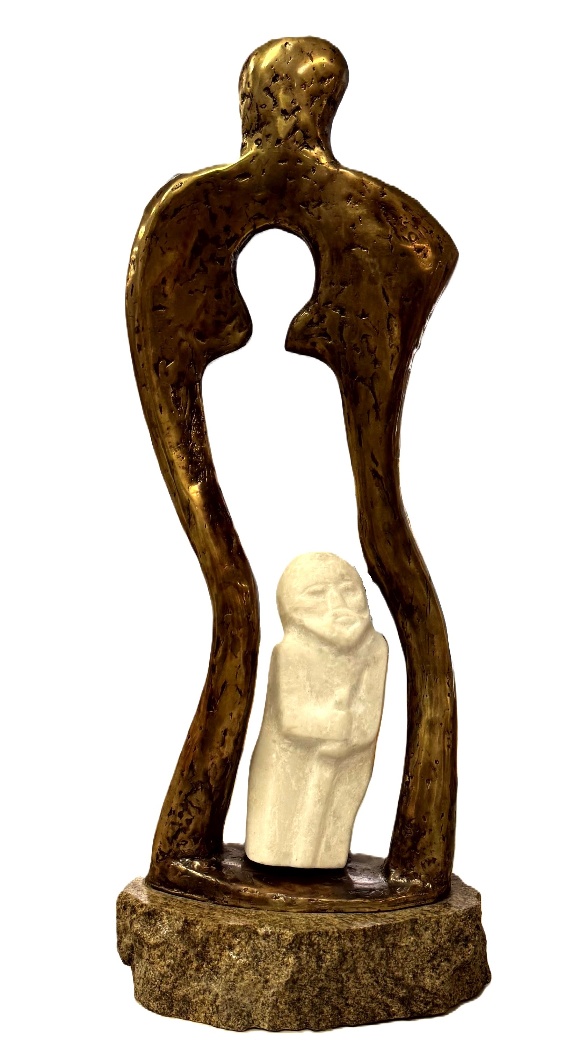
In this work, the traditional image of the balbal is reinterpreted through a contemporary visual language based on the interplay of form, material and space. The composition is built on the juxtaposition of two artistic systems — the archaic and the contemporary — which lends the work a multi-layered meaning.The bronze figure forms an elongated outline, within which a compact stone figure of a human is placed. The outer form is treated in an extremely generalised manner and is perceived more as a silhouette or a symbol, whereas the inner figure possesses greater sculptural definition. This creates not only a visual but also a conceptual contrast between the shell and the inner core of the image.The smooth fluidity of the bronze outline is contrasted with the static and closed nature of the stone figure. This relationship creates a tension between movement and stillness, conventionality and material stability. The opening at the top of the outer form reinforces the significance of the void as an active compositional element that shapes the work’s internal space.The interplay of materials lends the work particular expressiveness. The warm, patinated surface of the bronze contrasts with the light density of the stone, emphasising the difference in their plastic nature. The base unites both elements into a single structure and reinforces the sense of the composition’s integrity.