
‘Singing Dune’ ring, silver; casting, forging, engraving; movable inner element (small bell). Source: the artist’s Instagram page — @a.tlenbek
Aizhan Tlenbekova
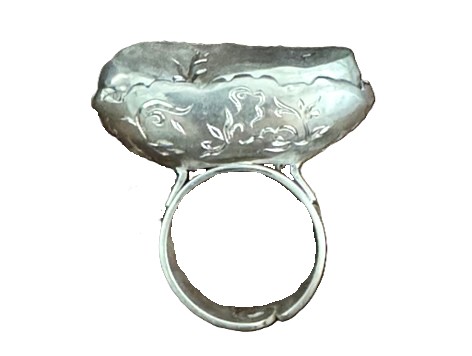
The ring features a complex three-dimensional structure combining a shank, a cup-shaped base and an asymmetrical upper module, which becomes the main sculptural focal point of the composition. The enlarged form takes the piece beyond the boundaries of a traditional ring and brings it closer to the object-based genre of jewellery art.The artistic concept is based on the juxtaposition of the ring’s closed geometry and the freely modelled upper volume, reminiscent of a natural formation. The surface is covered with an engraved floral ornament: smooth, flowing lines create a sense of movement and reinforce the connection with the natural environment. A hidden silver bell is placed inside the volume, adding a sonic dimension to the composition.The image of the ‘singing dune’ becomes the key thematic motif of the work. The sound element shifts the perception of the jewellery from the purely visual realm to the auditory and tactile, thereby transforming the ring into a synaesthetic object. The ornamental engraving further reinforces associations with natural processes, the movement of sand, and traditional notions of the human connection with the surrounding world.The distinctive feature of the piece lies in the incorporation of kinetic and sound elements into the structure of the jewellery form. The artist reinterprets the classic ring as an interactive artistic object, focused not only on visual perception but also on sensory experience. As a result, the work fits naturally within the practices of contemporary jewellery, which push the boundaries of traditional jewellery language.