
Decorative composition. Wood, bone, leather, metal, mixed media.
Daulet Shokparov
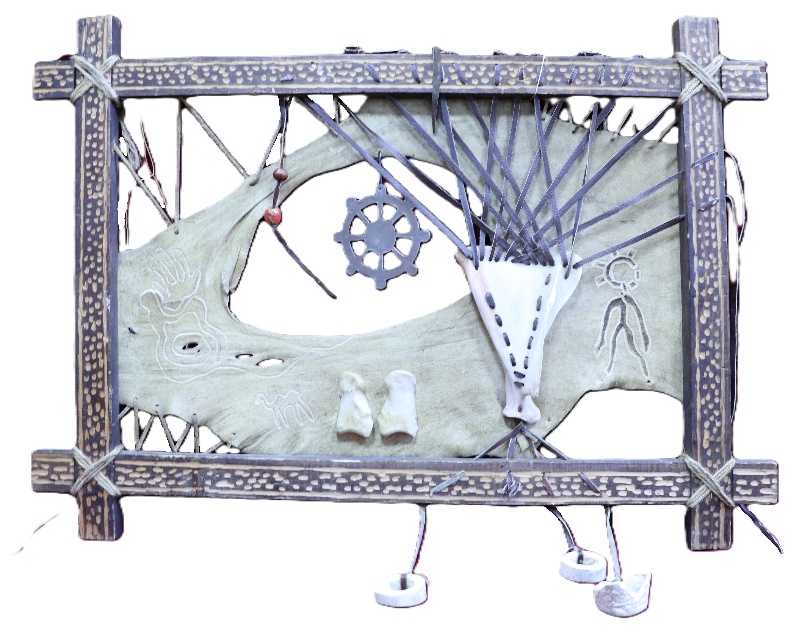
The archaic character of the composition is formed here through the combination of wood, leather, bone and metal into a unified material-plastic system, reminiscent of a sacred object from nomadic culture. The work is structured as a conventional ritual space, where each material retains its own textural and symbolic independence, whilst simultaneously becoming part of the overall artistic image.The wooden frame structure defines the boundaries of the composition and functions as a kind of framework for a sacred field. The interior space is organised by a stretched leather surface featuring graphic symbols, stylised anthropomorphic figures and symbolic elements associated with ancient Turkic petroglyphs and the shamanic pictorial tradition. As a result, the object is perceived not as a decorative plane, but as a carrier of an encrypted cultural text.The interplay of different textures plays a special role. The rough surface of the leather, the warm texture of the wood and the light plasticity of the bone inlays create a complex visual and tactile environment that enhances the sense of archaism and material authenticity of the object. Rope joints and suspended elements emphasise the handcrafted nature of the assembly and evoke associations with the traditional technologies of nomadic life.The metal details function as rhythmic accents, organising the compositional space and intensifying the structural tension of the form. Their inclusion creates a striking contrast between natural materials and elements associated with processed matter, lending the object a multi-layered artistic resonance.The work’s visual language lies at the intersection of decorative and applied arts, ethno-design and contemporary art practice. The artist draws on the archetypal symbols of nomadic culture not as ethnographic material, but as a system of images capable of functioning within a contemporary artistic context.The work reflects a trend characteristic of contemporary art in Kazakhstan towards the reconstruction and artistic interpretation of ancient visual models through the use of traditional natural materials, textural expressiveness and symbolic thinking.