
Tekemet, 1970. M. Seitbayeva
West Kazakhstan. Tekemet, 1970. Felt, felting. • From the collection of the A. Kasteev National Museum of Arts of the Republic of Kazakhstan (72-b).
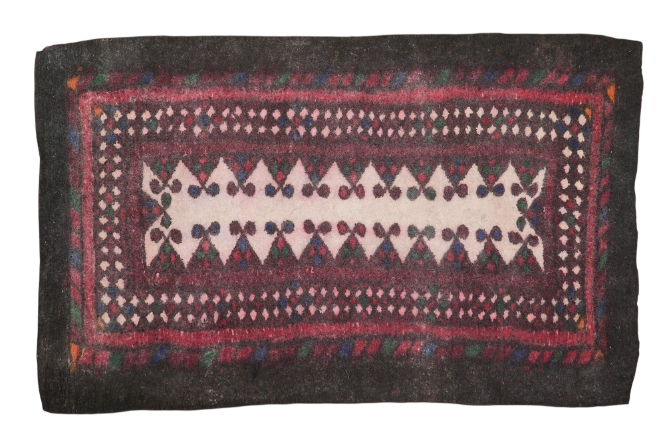
The tekemet on display features a classical composition with a clear division into a central field and a border. The composition is strictly symmetrical and organised along a longitudinal axis: the central section is accentuated by a light, elongated band, within which geometric elements are repeated rhythmically, forming a dynamic ornamental sequence. The border consists of several ornamental bands featuring a fine, repeating pattern. The ornamentation is predominantly geometric in nature, with a predominance of diamond-shaped and triangular motifs, which may be interpreted as symbols possessing not only a decorative but also a protective function. The carpet’s colour scheme is based on a combination of deep, dark shades—burgundy, brown and black—with a contrasting light centre, which lends the composition expressiveness and visual depth. The intricate detailing of the ornamentation and the slight asymmetry of individual elements indicate that it was hand-woven and reflect a high level of craftsmanship. In terms of its artistic and stylistic features, the tekemet is closely related to Turkmen traditions.