
Alasha, 2011. Oil on canvas. Source: catalogue of the artist’s works
Kazakhbay Azhibekuly
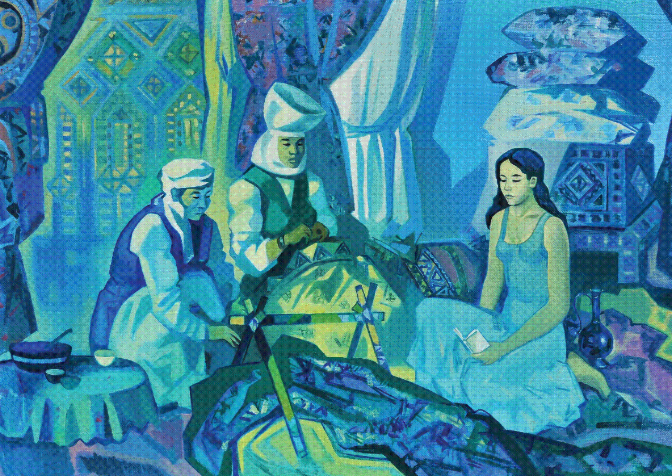
The artist interprets the space of the yurt as a unique cultural microcosm where craft, memory and continuity converge. The figures of the craftswomen working on the alasha are perceived as guardians of tradition, whilst the weaving process itself becomes a metaphor for the continuity of heritage.The cool turquoise-blue colour scheme plays an important semantic role. It distances the image from a realistic domestic scene and lends the scene a sense of meditativeness and inner tranquillity. Bright lemon-yellow accents enliven the composition and create an effect of inner radiance, as if the space of the yurt were filled with spiritual energy. The decorative stylisation emphasises the work’s connection to the traditions of folk applied art. Here, the ornamentation is not merely a background but a fully-fledged structural element. The figure of the girl with a book carries a particular symbolic significance. Her image symbolises a dialogue between the past and the present. Whilst the craftswomen embody traditional craftsmanship, the book becomes a symbol of modern education and intellectual development. The artist emphasises that the preservation of cultural heritage does not conflict with the pursuit of new knowledge; on the contrary, it forms the basis for the development of society.