
Karshyn, second half of the 20th c.
Second half of the 20th century. Turkestan Region. Collection of the Central State Museum of the Republic of Kazakhstan
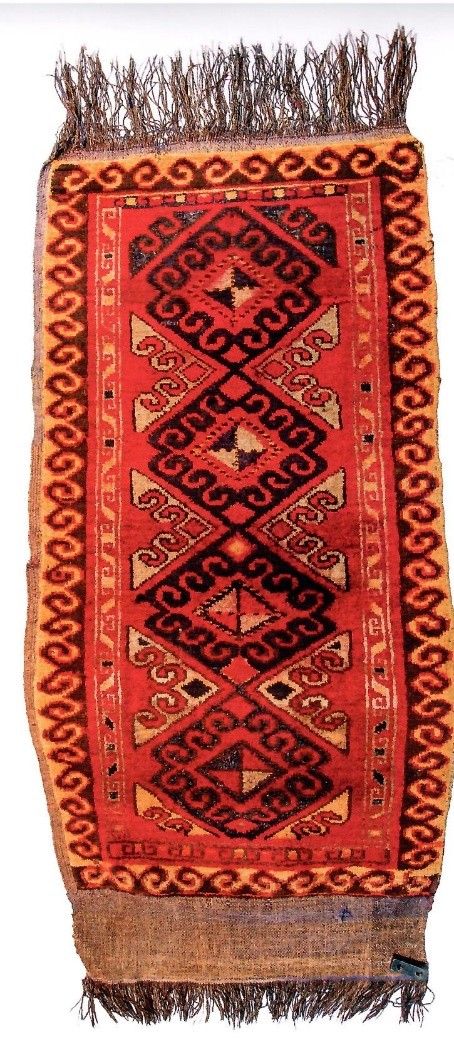
Karshyn is a cover for chests. The decoration of this example is based on a carpet-like pattern, with a clear distinction between the central field and the border. The central field is formed by four diamond-shaped sharshy rosettes, composed of syngarmuyiz and qosmuyiz patterns. The horn motifs lend the composition plasticity and dynamism, whilst their symmetrical arrangement reinforces a sense of stability.In traditional symbolism, the sharshy (diamond/square) symbolises the earth, ordered space and fertility; the qosmuyiz (‘paired horn’) is one of the oldest zoomorphic symbols, associated with ideas of strength, abundance and prosperity; syngarmuyiz (‘single horn’) varies the same symbol, adding rhythmic flexibility to the composition.The border is formed by a combination of the itquiryk (‘dog’s tail’) and qosmuyiz patterns. The plasticity of the itquiryk pattern reinforces the ornament’s protective function, forming a defensive boundary around the central field.