Traditional and contemporary art of Kazakhstan

A Virtual Journey into the World of Kazakhstan’s Artistic Heritage

This Web Gallery presents the diversity of artistic practices in Kazakhstan, reflecting the continuity of cultural traditions and the dynamic development of contemporary creative processes. The virtual exhibition features works based on national images, symbols, and themes, as well as artworks by contemporary artists who reinterpret the country’s cultural heritage through contemporary artistic forms, expressive means, and modern technologies.

The selected works demonstrate the relationship between traditional and contemporary art, revealing the distinctive features of the national worldview, cultural identity, and cultural meanings. The presented materials allow viewers to trace how elements of historical and cultural heritage are reflected in contemporary artistic practice, while maintaining their significance and relevance in an increasingly globalized world.

The Web Gallery is aimed at promoting Kazakhstan’s artistic heritage, expanding public access to works of art, and fostering a lasting interest in national culture and art among a wide audience.

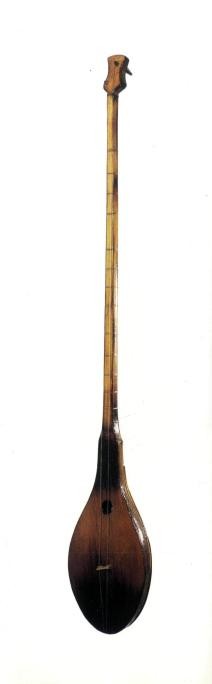
Dombra

The dombyra is a stringed plucked instrument which, according to researchers, has a long history. Its prototype probably originated in the Neolithic era, as evidenced by petroglyphs in Kazakhstan. Like the kobyz, traditional dombyras had no decoration. This is how the dombyras of Abay Kunanbayev, Akan Sery Koramsau, Zhambyl Zhabayev and many other great musicians, writers and poets in the Ykylas Dukenuly Museum of Musical Instruments. It was probably only in the second half of the 20th century that kobyz and dombras began to be decorated with ornamental inlays made from other coloured woods and bone.