Traditional and contemporary art of Kazakhstan

A Virtual Journey into the World of Kazakhstan’s Artistic Heritage

This Web Gallery presents the diversity of artistic practices in Kazakhstan, reflecting the continuity of cultural traditions and the dynamic development of contemporary creative processes. The virtual exhibition features works based on national images, symbols, and themes, as well as artworks by contemporary artists who reinterpret the country’s cultural heritage through contemporary artistic forms, expressive means, and modern technologies.

The selected works demonstrate the relationship between traditional and contemporary art, revealing the distinctive features of the national worldview, cultural identity, and cultural meanings. The presented materials allow viewers to trace how elements of historical and cultural heritage are reflected in contemporary artistic practice, while maintaining their significance and relevance in an increasingly globalized world.

The Web Gallery is aimed at promoting Kazakhstan’s artistic heritage, expanding public access to works of art, and fostering a lasting interest in national culture and art among a wide audience.

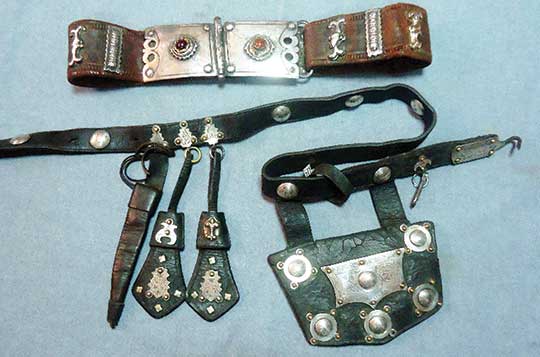
Kise-belbeu

Kise-belbeuThe belt was an essential element of a Kazakh man’s costume. Firstly, it held in place the wide, long-skirted garments, which had no fastenings. Secondly, hanging elements were attached to the belt to carry items necessary for nomadic life: flints and tinder, gunpowder, knives and other small accessories.From the mid-19th century onwards, the belt’s function as an indicator of the owner’s social status became increasingly apparent. Wealthy people began to use belts made of carefully crafted leather, decorated with silver buckles and overlays, which emphasised the prestige and position of the owner in society.A belt could be used to determine a person’s age, family, region of origin and occupation. Belts were considered the most expensive and significant part of a costume, they were highly valued and passed down from generation to generation as a family heirloom, a symbol of family continuity and social status.