
‘The Tree of Happiness’Location: Almaty, at the entrance to the First President’s ParkSource: Kursiv.media
The Tree of Happiness
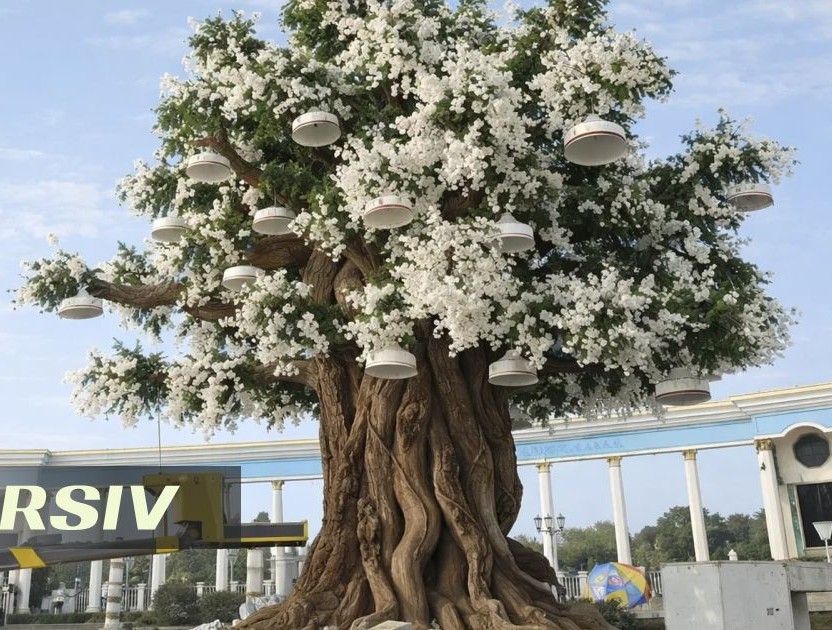
The ‘Tree of Happiness’ is a monumental art installation that organically combines natural symbolism, decorative elements and features of contemporary public art. The composition is based on the archetypal image of the Baiterek World Tree — one of the oldest symbols, embodying the ideas of life, growth, the continuity of generations and the harmony of the universe.The central element of the work is a mighty trunk with intertwined roots and branches, rendered with striking sculptural expressiveness. The root system visually connects the earth and the crown, emphasising the idea of the unity of the past, present and future.The tree, in full bloom with white flowers, holds particular significance. The colour white is traditionally associated with purity, well-being, spiritual renewal and hope. The lush crown creates a sense of abundance and vital energy, transforming the piece into a unique symbol of prosperity and happiness. Here, the blossoming serves as a metaphor for the continuous rebirth and flourishing of human life.An unusual artistic technique is the inclusion in the composition of suspended decorative elements in the form of small yurts. These add an additional layer of meaning to the work.