
Kusbegi, 2011. Source: Kazakh Art, Vol. 5. Almaty, 2013
Tleuzhan Batanov
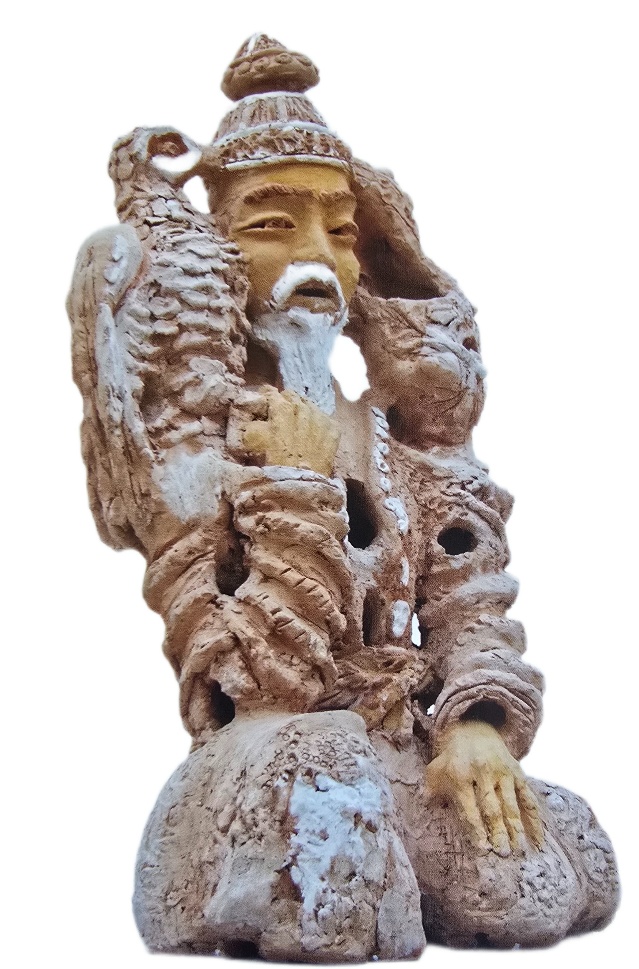
The sculptural composition ‘Kusbegi’ draws on one of the most significant archetypes of nomadic culture — the image of the berkutchi, the guardian of the ancient art of hunting with birds of prey. In Kazakh tradition, the word ‘kusbegi’ itself refers to a person who has attained the highest level of mastery in taming and training birds of prey.At the centre of the composition stands a man—a steppe hunter—whose figure exudes inner dignity and a focused stillness. His face is devoid of outward emotion, yet the contours of his features convey a deep life experience and spiritual resilience. The bird perched on the hunter’s arm is not perceived as a separate element of the composition: the forms of the man and the golden eagle seem to merge into one another, forming a single sculptural structure. This creates a sense of an organic union between man and nature, based on mutual trust and a special bond.The material and the textured finish of the surface lend the work its expressiveness. The rough, porous texture of the chamotte clay gives the impression of an ancient artefact that has been weathered by time, wind and the elements of the steppe. The sculpture resembles an archaeological find or a stone statue that has retained traces of the past. This textural quality emphasises the archaic nature of the image and reinforces the sense of connection with the ancient Turkic cultural tradition.