
‘Quryltay’, 2023 Photograph by Zh. N. Shaygozova
Abylkhai Asel
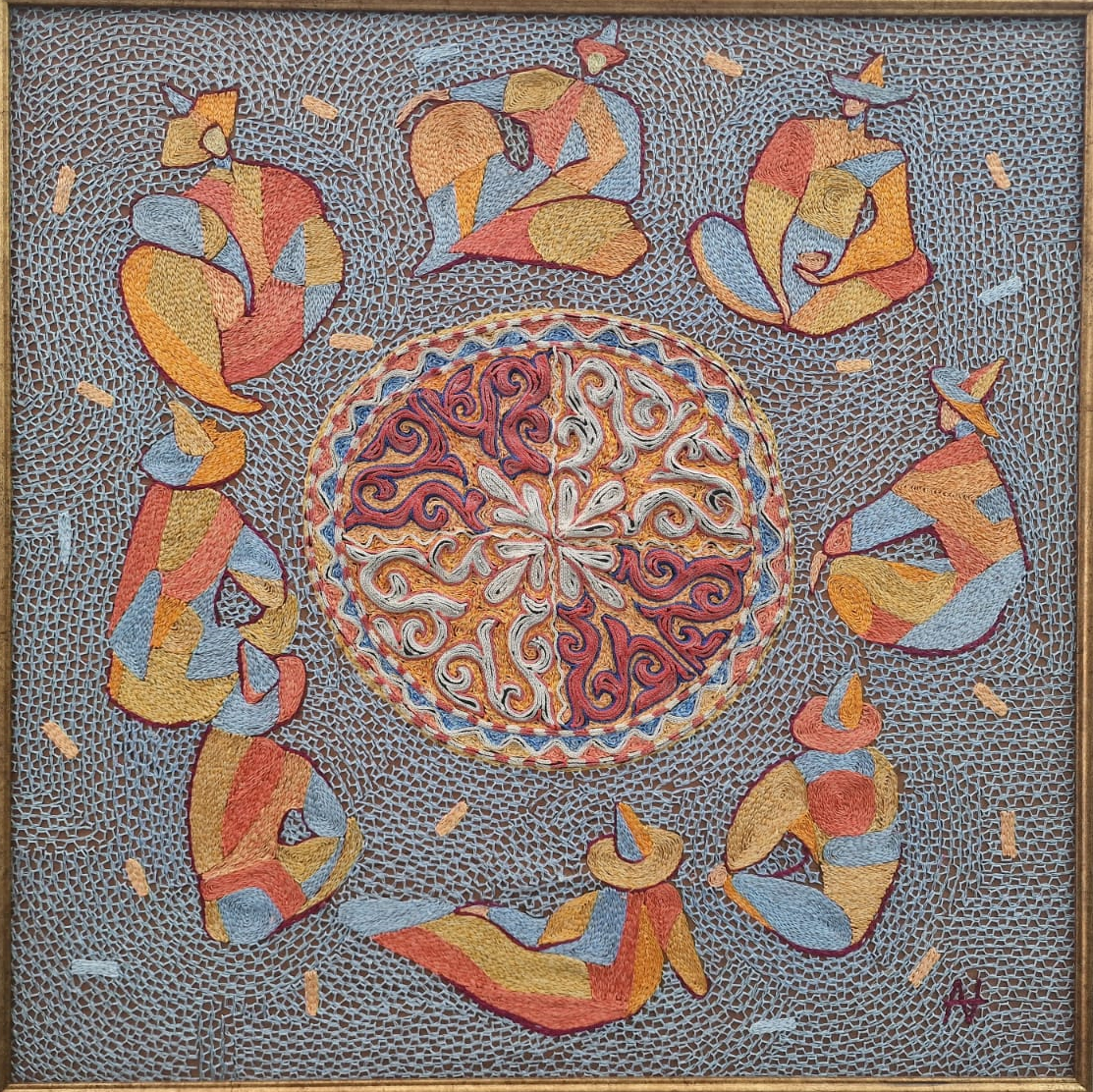
The work is organised according to the principle of a mandala composition. At the centre is a richly ornamented circle, which can be interpreted as an image of the communal table – the universal centre of the universe in the traditional Kazakh worldview. This central element acts as the semantic core of the composition, around which the figures are arranged in a circular pattern, forming a model of collective unity and balance.The circular structure of the composition corresponds directly to the idea of the kurultai—a traditional institution of public assembly among nomadic peoples, where every participant has an equal voice and significance. The visual organisation of the scene becomes a metaphor for dialogue, harmony and collective decision-making, reflecting the principles of steppe democracy.The work’s colour scheme plays a key role in shaping its semantic field. Terracotta and ochre shades evoke the image of the earth, traditional way of life and the material foundations of existence, whilst golden accents emphasise the sacred nature of the central circle and its connection to the idea of the sun as a source of energy and order. The blue colour introduced into the composition symbolises the open sky, peace and spiritual clarity, thereby creating a balance between the earthly and heavenly principles.