
From the series ‘Kazakh Chronicle’, Apa on a Cow. 2015. Acrylic, print on canvas. From the artist’s personal archive
Suleimenova Saule
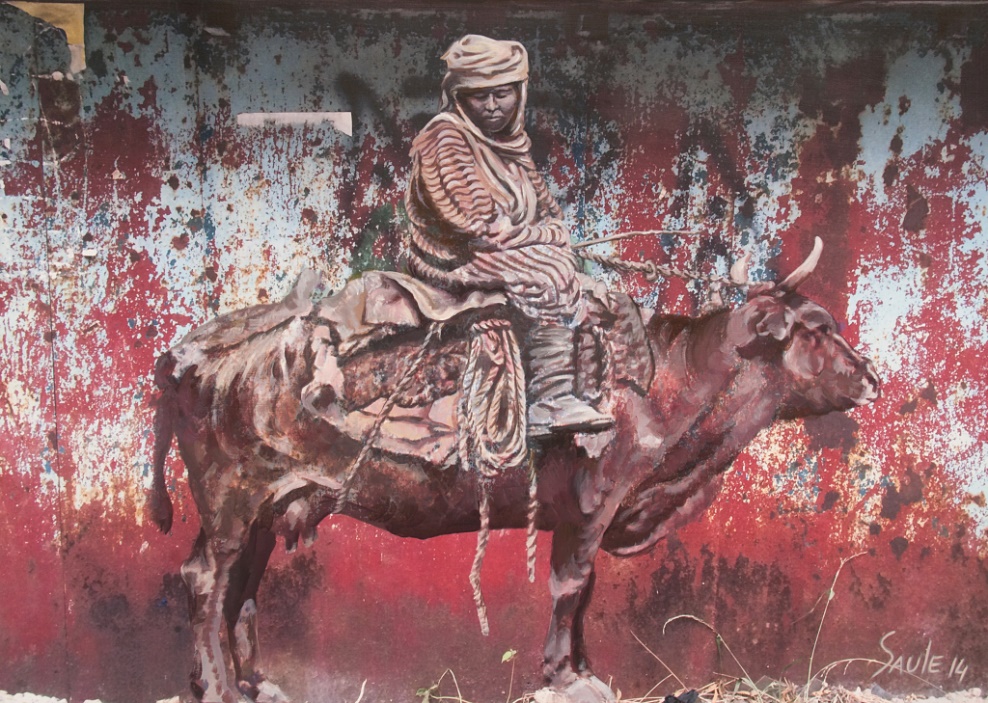
The work is a characteristic example of a contemporary Kazakhstani artistic interpretation of the image of the Great Steppe. At the centre of the composition is a woman riding a cow—an image that evokes traditional nomadic culture, archaic forms of subsistence, and the collective historical memory of the people. The artist deliberately avoids idealised ethnography: the human figure is rendered in a generalised and monumental manner.The texture of the work plays a special role. The surface appears as if eroded by time: reddish-brown, whitish and dark layers resemble rust, a peeling wall or an old photograph. This creates an effect of ‘residual memory’, characteristic of Saule Suleimenova’s work. The colour scheme is built on the contrast between cool grey-blue and intense red hues. The red background heightens the drama of the scene and can be interpreted as a symbol of historical upheavals or collective trauma. At the same time, the figure of the rider retains an inner calm and stability, becoming a symbol of cultural memory and the continuity of tradition.