
Beauty, 2024. Bronze. Almaty
Aidos Toktarbekuly
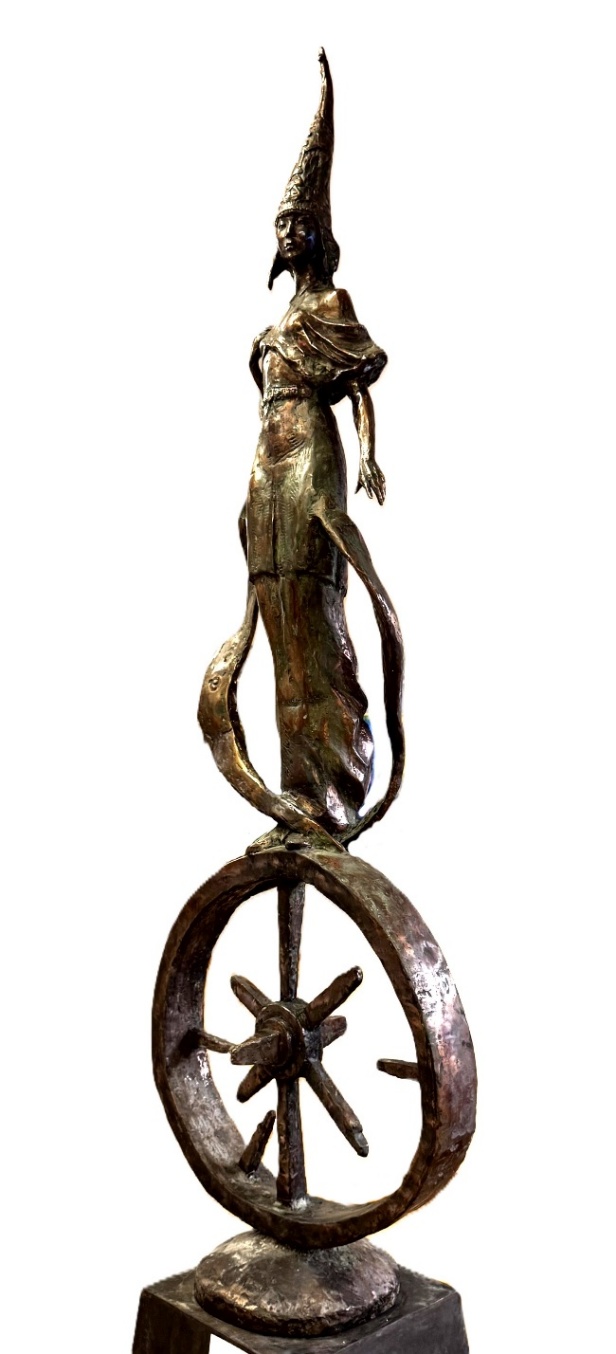
The composition is built on the combination of a vertically elongated female figure and the symbolic form of a wheel, which becomes the key structural element of the work. The combination of the anthropomorphic image with the circular symbol gives the work a multi-layered meaning, where beauty is revealed as a category of movement, time and the continuity of the life cycle.The figure is rendered in a generalised and stylised manner. The elongated proportions and tall headdress reinforce the vertical orientation of the image and bring it closer to archaic and ethnocultural artistic canons. The absence of detailed anatomy allows the female figure to be perceived not as a portrait, but as a symbolic embodiment of harmony and inner composure.The wheel at the bottom of the composition serves both a structural and a symbolic function. It sets the rhythm for the entire structure and is perceived as a sign of movement, destiny and eternal return. Thanks to this, the image of the ‘beauty’ transcends a mundane interpretation and takes on a philosophical dimension.The bronze surface retains traces of modelling and casting, which lends the form a living materiality. The contrast between smooth and rough areas enhances the play of light and makes the sculpture visually more dynamic. The gently curving lines at the lower part of the figure create a particular expressiveness, linking the body to the circular form and uniting the composition into a single rhythmic silhouette.Here, the female image becomes part of a broader cultural and cosmological space, where the human being is perceived as inextricably linked to the rhythms of the world and time.