
Kise Beldik, Belt set, leather, metal (silver/alloy); embossing, casting, engraving, assemblyPhoto: A. Ibragimov, the artist’s studio
Mahmut Kulmanov
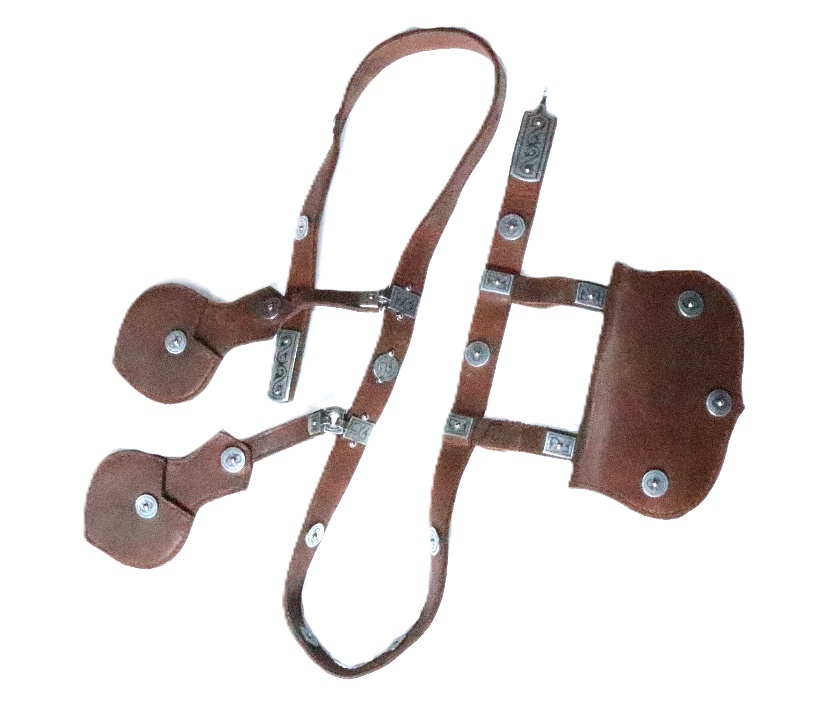
This complex belt ensemble combines a system of leather straps, metal elements and functional pendants into a single spatial structure. The modular design allows individual components to interact with one another, forming an expansive composition that wraps around the body.The sculptural structure is built on a combination of linear strap elements and decorative metal accents. The leather straps form a distinctive framework, within which functional and ornamental components are placed. Metal plates fixed to the surface create a rhythmic system of repetitions, whilst the suspended elements enhance the sense of movement and spatial depth. The open nature of the composition lends the structure flexibility and allows it to adapt to the contours of the figure.The design language of the complex draws on the traditions of nomadic culture, where belt systems served utilitarian, status-symbol and decorative functions simultaneously. The suspended and auxiliary elements indicate the practical purpose of the piece, linked to the carrying of objects and the organisation of everyday space. Ornamental metal inserts further enhance the symbolic and visual significance of the structure.