
Carpet Weaver, 2024. Chamotte. Almaty
Bagdat Sarsen
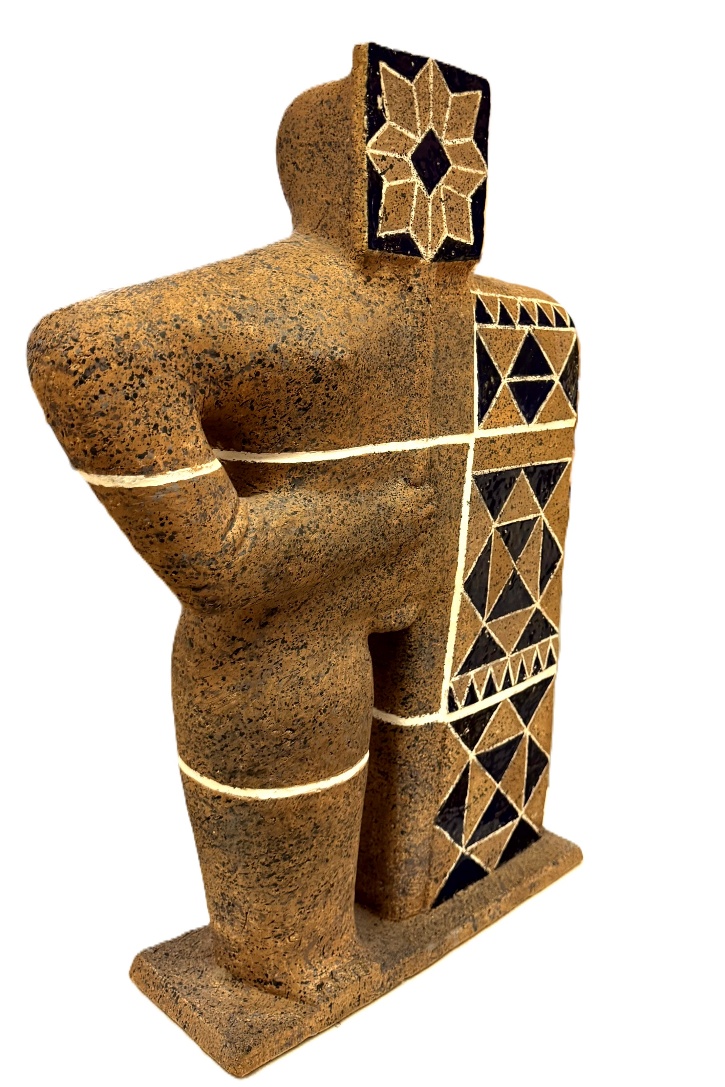
The work is based on the combination of plastic form and ornamental rhythm, where the human figure is perceived as a bearer of cultural tradition. The figure is rendered in an extremely generalised and geometrised manner, which brings it closer to archaic forms and reinforces the decorative and symbolic nature of the composition.The massive frontal torso is constructed as a single, stable volume. The absence of detailed facial features and the stylised treatment of the anatomy shift the focus from individuality to the archetypal image of the craftsman. The pose, with hands behind the back, reinforces a sense of inner composure and calm stillness.The main compositional focus is the vertical ornamental plane, integrated into the structure of the figure. The geometric pattern of diamond-shaped and triangular elements references traditional carpet ornamentation, through which the craft is revealed not as a subject but as the foundation of the work’s visual language.The chamotte retains the natural grain and roughness of the surface, lending the form a density and a sense of connection with the natural material. The smoother lines of the ornament contrast with the main texture and reinforce the rhythmic organisation of the composition.The head is treated as a stylised volume with an integrated ornamental motif, continuing the logic of generalisation. Here, the ornament replaces individual features and becomes a sign of cultural identity.The work reflects an interest, characteristic of contemporary Kazakhstani sculpture, in reinterpreting decorative heritage, where traditional ornamentation is transformed into an independent structural and semantic element of the artistic form.