
Art object, 2015, wood, silver, lapis lazuli, carnelian; wood carving, casting, soldering, inlaySource: the artist’s Instagram page — @serzhankz
Serzhan Bashirov
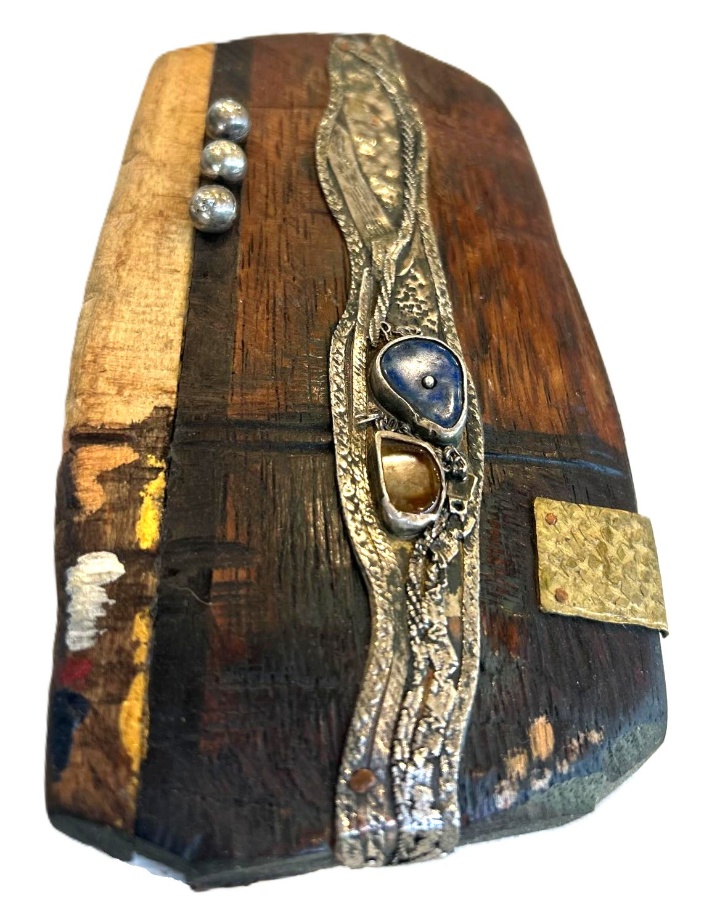
The small sculptural form combines an organic wooden base with metal and stone inlays, creating an object that straddles the boundary between jewellery art and sculpture. The work is not intended to be worn and is perceived as a standalone work of art.The composition is built on the juxtaposition of different materials and textures. The base is made of solid wood with its natural texture preserved and traces of hand-finishing, giving the object a lively, almost organic character. Along the central axis lies an elongated metal element of complex form, inlaid with lapis lazuli and carnelian. Additional metal details—spherical elements and plates—form an asymmetrical structure and enhance the sense of internal movement.The conceptual basis of the work lies in the interplay between natural and cultural elements. Wood serves as a symbol of the natural environment and the primordial, whilst metal and stone are associated with the idea of the artistic transformation of material. Lapis lazuli is traditionally associated with the celestial and spiritual realms, and carnelian with vital energy and inner strength, lending the composition a multi-layered symbolic resonance.The distinctive feature of the piece lies in its expansion of the boundaries of jewellery art beyond the confines of traditional ornamentation. The use of jewellery techniques combined with methods from sculpture and decorative and applied arts forms a hybrid artistic form. As a result, the work is perceived not only as a decorative object, but also as an artistic statement reflecting the interdisciplinary nature of contemporary art.