
Handled vessel. Kuyruktobe settlement
From the book: Artistic Culture of Central Asia and Azerbaijan, 9th–15th Centuries. Volume II. Glass. — Samarkand-Tashkent: MICAI, 2011.
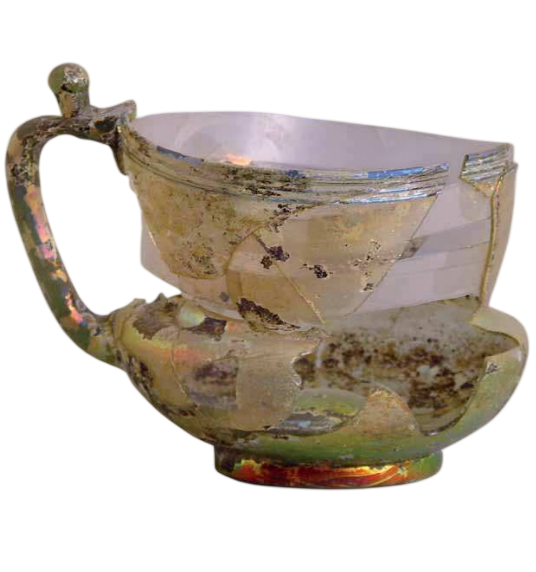
A vessel with a handle, discovered at the Kuiruktobe settlement, dates from approximately the 10th–12th centuries. Its form is distinguished by functional ingenuity: a squat body, gradually widening towards the top, is combined with a low ring-shaped base, ensuring stability and ease of use.Particular attention should be paid to the elegant C-shaped vertical handle, which blends seamlessly into the vessel’s silhouette. At the top, it is complemented by a small protrusion serving as a thumb rest, which testifies to the craftsman’s attention to the ergonomics of the piece and the user’s comfort.The decorative design is understated yet striking. Beneath the rim on the body, horizontal relief bands can be seen, executed in the form of applied glass threads or grooves. These elements were applied whilst the vessel was being spun and not only enhanced its decorative quality but also gave the surface additional texture, enriching the play of light on the glass.