
Ayak kap 20th c.
Turkestan Regional Museum of History and Local Lore
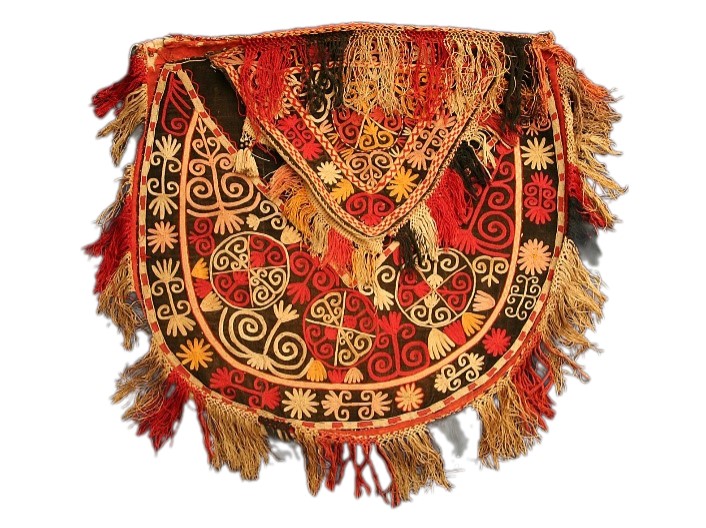
The item is made of white felt and has a rectangular shape with a gently rounded bottom, which gives the design a soft silhouette and makes it comfortable to use. The front is decorated with black velvet, which provides a contrasting background for the ornamental composition and highlights the decorative nature of the embroidery. The edges of the piece are finished with fabric edging and hand-woven coloured fringe, enhancing the expressiveness of the decorative design.The ornamental composition features traditional motifs of Kazakh ornamentation: ‘tabakty gul’, ‘tortkulak’, ‘muyiz’, ‘agash’, ‘gul’, ‘kosmuyiz’. These elements form a rhythmic and balanced decorative system characteristic of folk textiles. The ornamental forms combine plant and zoomorphic motifs, symbolising fertility, prosperity and vitality.The upper part of the bag features a triangular flap decorated with a pattern repeating the main elements of the central ornamental composition. This compositional solution creates a sense of unity in the artistic image of the item. Loops for hanging are situated along the edges, reflecting the functional purpose of the item and the tradition of placing such objects on walls or inside a yurt.The item entered the collection from the Shymkent Regional Inspection. The bag is of interest as an example of Kazakh folk textiles, in which practical function, traditional materials and rich ornamental decoration are organically combined.