
Qoramsaq
Kazakhs. Late 19th–early 20th centuries. From the collection of the Museum of Art and Ethnography, Russian Academy of Sciences.
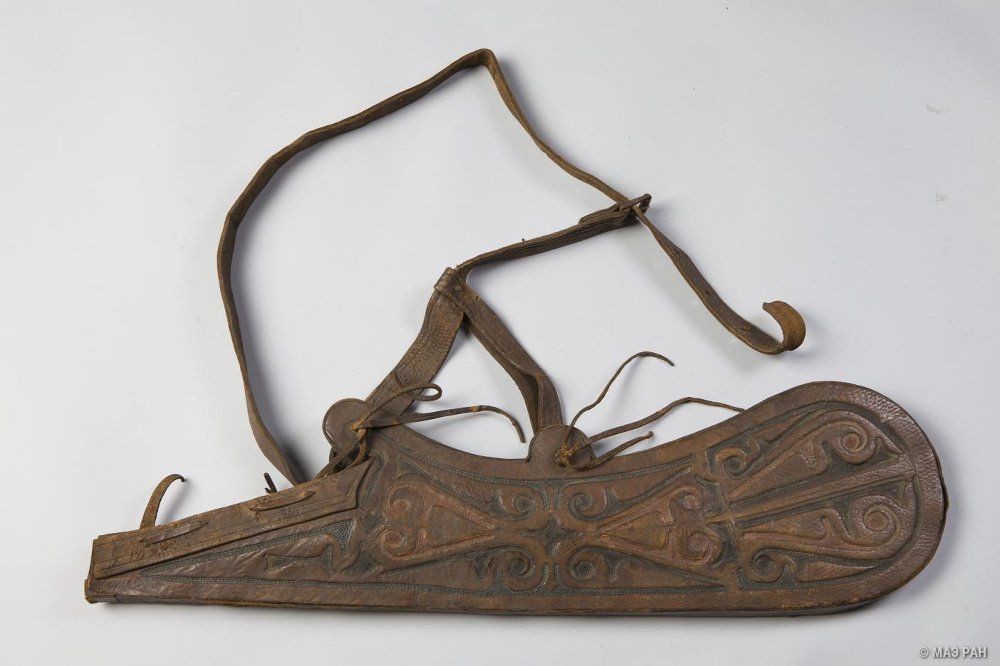
Oq kap or koramsak is a traditional quiver for arrows, which was an important attribute of nomadic horse equipment. For Kazakh nomads, bows and arrows were necessary not only during military operations, but also in everyday life, including hunting and self-defence. In some cases, these items served as symbols of social status and legal standing, reflecting the owner’s position in the tribal hierarchy.Until the mid-19th century, bows and arrows were actively used for hunting, but with the development of new technologies and changes in the lifestyle of nomadic societies, their importance in everyday life gradually declined, and they almost disappeared from everyday use.As a rule, the basis of the “oq kap” was the tough skin of cattle or horses, which gave the quiver strength and durability. Embroidery, embossing, metal plaques or silver inserts were used for decoration, and sometimes felt and fabric were also used. The seams were made with strong leather or plant fibres, and the edges were often trimmed for additional protection against wear and tear.