
Sholpy
Hair ornament. 19th century. North Kazakhstan. Silver, carnelian, braiding, twisting, coins, engraving. A. Kasteyev National Museum of Arts of the Republic of Kazakhstan
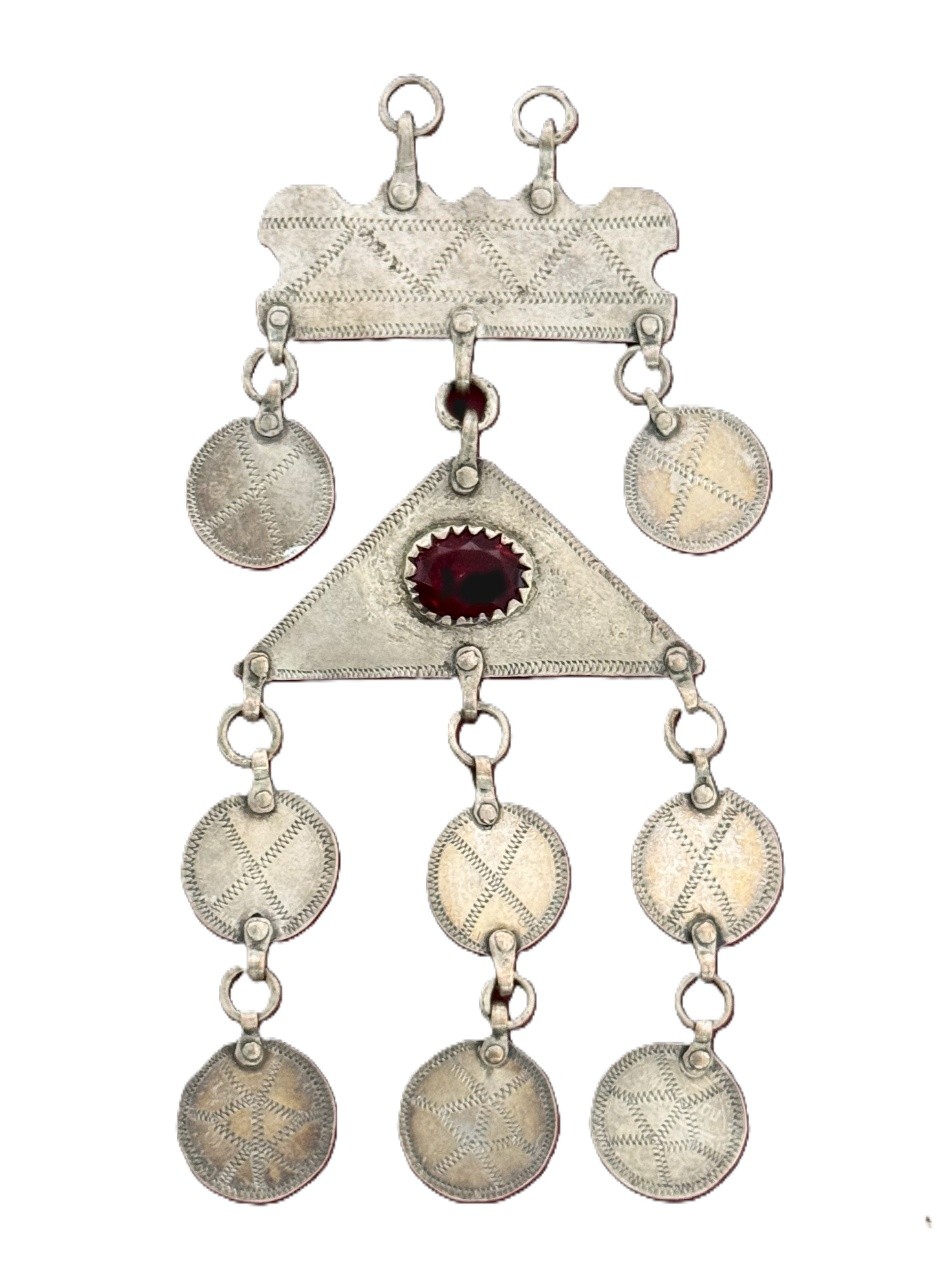
Sholpy, a pendant-style hair ornament. 19th century, North KazakhstanThe item belongs to the category of traditional hair ornaments designed to be woven into braids, serving both decorative and amuletic functions. It is characterised by a simple design and a clear hierarchy of elements.The design comprises an upper horizontal plate with fastening rings, from which a central triangular element with a stone inlay is suspended. The lower part is complemented by a system of pendants consisting of chain links and disc-shaped elements. All joints are hinged, ensuring the structure’s mobility.The composition is organised along a vertical axis, clearly divided into two main zones: the upper (plate) and the lower (suspension system). The central triangular element with a carnelian inlay serves as the compositional core. The suspensions are arranged in rhythmic vertical lines, forming an orderly structure.The ornamental system is based on geometric motifs. The surfaces of the plates and discs are decorated with an engraved pattern dominated by triangular and cross-shaped elements. The central carnelian inlay creates a colour accent and enhances the expressiveness of the composition.The hanging elements lend the piece a sense of dynamism and produce a sound effect when in motion. Overall, the ornament demonstrates a combination of strict composition, rhythmic organisation and symbolic richness characteristic of the North Kazakh tradition.