
A relief composition. Wood, carving, staining.
Temir Begimbet
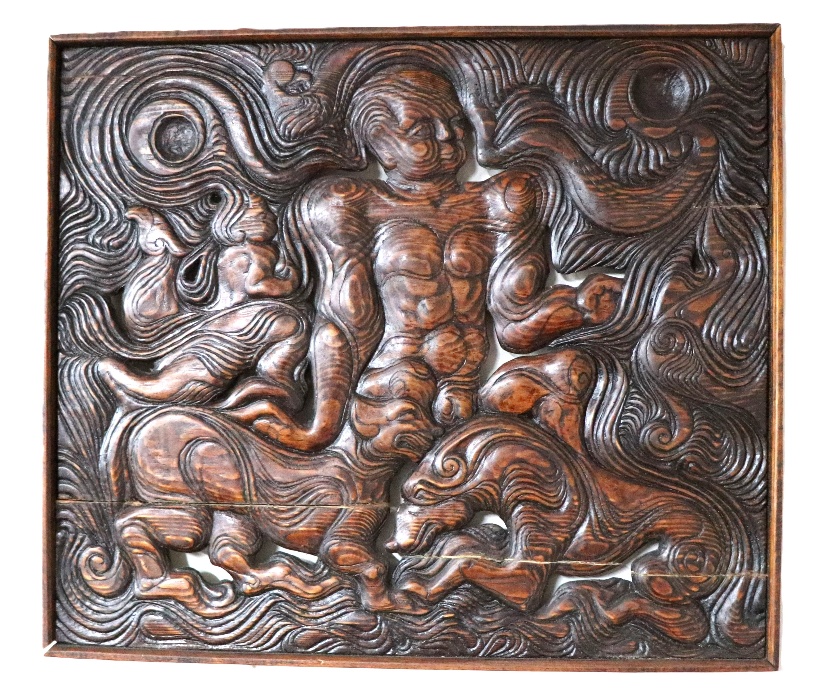
In this composition, relief carving becomes an independent visual language through which the artist constructs a complex system of mythological and symbolic images. The work is organised as a unified decorative field, rich with an interweaving of anthropomorphic, zoomorphic and ornamental elements linked by a common rhythmic structure.The central image is interpreted in a conventional-epic manner and is devoid of everyday specificity. The figure is perceived more as an archetypal character or a bearer of collective memory than as an individualised hero. Surrounding it is a system of undulating lines, spiral-like flows and stylised forms, creating a sense of continuous movement and the inner energy of the space.The artistic expressiveness of the work is largely based on a deep engagement with the texture of the wood. The direction of the wood grain, the marks of the chisel and the nuanced toning play an active role in constructing the composition, enhancing the material richness of the surface. The polishing of individual sections and the contrast of light-and-shadow transitions allow the depth of the relief to be accentuated and the multi-layered nature of the plastic structure to be emphasised.The ornamental system does not exist separately from the image, but is integrated into the very fabric of the composition. Wavy rhythms and stylised decorative motifs form a unified space where the plasticity of traditional Turkic carving is reinterpreted through the means of contemporary artistic stylisation. Thanks to this, the work avoids direct ethnographic representation and takes on the character of an independent artistic statement.In terms of content, the work addresses themes of cultural memory, epic consciousness and the archaic symbolism of the steppe world. Ancient Turkic motifs are not reconstructed literally here, but are transformed into a system of contemporary visual images that retain a connection with historical tradition.