
Potter’s workshop. 15th–17th centuries. Kultobe settlement
Pottery workshop with a kiln • for firing pottery, 15th–17th centuries. Kultobe settlement, Turkestan Region
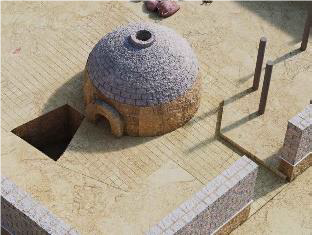
This site reflects the high level of development of ceramic art and urban craft traditions in Southern Kazakhstan, which was situated at the crossroads of Central Asia’s trade and cultural routes.The architectural layout of the workshop is tailored to production needs and is characterised by functional ingenuity. The central element of the complex is the pottery kiln, the design of which demonstrates a sound understanding of ceramic firing techniques. The kiln was divided into a firing chamber and a combustion chamber, which ensured an even distribution of temperature and allowed to produce high-quality items. Such engineering solutions demonstrate the high professional standard of medieval craftsmen.From an artistic point of view, the ceramic products themselves, created in such workshops, are of particular interest. The items were distinguished by a variety of forms and decorative motifs, including geometric, floral and epigraphic patterns. Ceramics served not only a utilitarian but also an aesthetic function, forming an important part of the population’s everyday culture.