Traditional and contemporary art of Kazakhstan

A Virtual Journey into the World of Kazakhstan’s Artistic Heritage

This Web Gallery presents the diversity of artistic practices in Kazakhstan, reflecting the continuity of cultural traditions and the dynamic development of contemporary creative processes. The virtual exhibition features works based on national images, symbols, and themes, as well as artworks by contemporary artists who reinterpret the country’s cultural heritage through contemporary artistic forms, expressive means, and modern technologies.

The selected works demonstrate the relationship between traditional and contemporary art, revealing the distinctive features of the national worldview, cultural identity, and cultural meanings. The presented materials allow viewers to trace how elements of historical and cultural heritage are reflected in contemporary artistic practice, while maintaining their significance and relevance in an increasingly globalized world.

The Web Gallery is aimed at promoting Kazakhstan’s artistic heritage, expanding public access to works of art, and fostering a lasting interest in national culture and art among a wide audience.

Carpet with ornament Gul Kumbizdi 20th c.

2nd half of the 20th century. Turkestan region. Wool yarn, pile weaving. KP 12449 (Catalogue, 99)
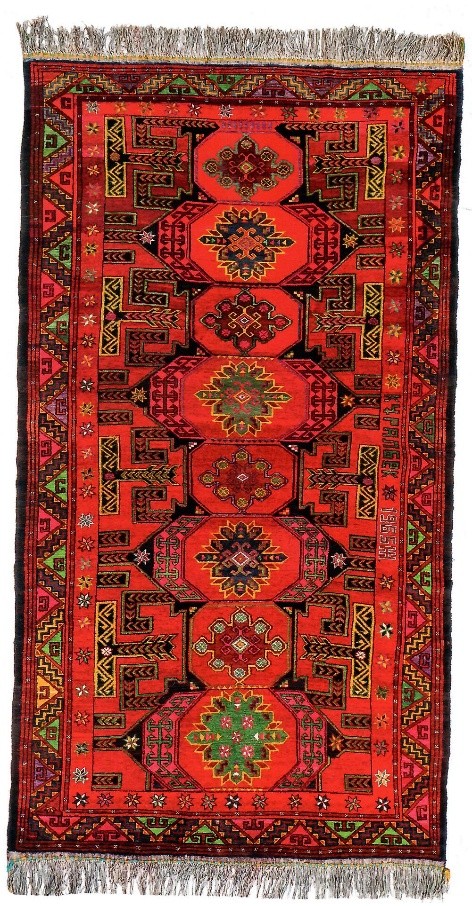
The carpet shown here is decorated with large gulkumbezdi rosettes, which are arranged in a horizontal composition. Connecting elements between the rosettes create a visual link and a rhythmic unity within the composition. According to researchers, the gulkumbezdi rosette itself is inspired by the image of a dome — a symbol of the celestial sphere, harmony and eternity. This ornament reflects a striving for cosmic wholeness and is a traditional symbol carrying a deep sacred meaning associated with nature, rebirth and protection. Complex frame borders, consisting of repeating geometric forms, define the structure and visual boundaries of the carpet’s composition.